10 Most Common Addictions in the U.S.: What You Need to Know

Substance and behavioral addictions affect millions of Americans, with alcohol and drug abuse cases—and their consequences for people and their communities—climbing steadily.

Addiction touches every community, every age group, and every socioeconomic class in the U.S.. Whether it’s the executive hiding a drinking problem, the teenager vaping between classes, or the retiree unable to stop gambling online, addiction has woven itself into the fabric of American life. From substances that alter brain chemistry to behaviors that hijack our reward systems, these dependencies share one thing in common: They’re incredibly difficult to break without help.

Understanding these common addictions is important, not just for those directly affected but for anyone who wants to support a loved one through recovery.

Let’s explore the 10 most prevalent addictions plaguing Americans today, what drives them, and how to find help.

1. Alcohol Addiction

When you drink alcohol, it does double duty: slowing down your nervous system while releasing a rush of dopamine that makes your brain crave more. This combination is especially addictive because your brain starts to rely on alcohol for both relaxation and pleasure, eventually needing more to achieve the same effects. One report from the National Council on Alcoholism and Drug Dependence calls alcohol “the most commonly used addictive substance in the United States.”1

Risk Factors

There are several possible causes of alcohol use disorder:2

  • Genetic predisposition
  • Family history of alcohol abuse
  • Co-occurring mental health issues

In a society where drinking is often the default social activity and alcohol is as accessible as coffee, the path to addiction can be deceptively smooth.

Effects 

According to the Centers for Disease Control and Prevention (CDC), long-term excessive drinking puts you at risk3 of physical health problems and other side effects, including but not limited to:

  • Cancer
  • Chronic diseases such as heart disease and liver disease 
  • High blood pressure
  • Stroke 
  • Digestive issues 
  • Memory and learning problems
  • Social issues 

Alcohol addiction also affects mental health. It can lead to mental health conditions like depression, memory problems, and even antisocial behavior. Withdrawal symptoms can be especially dangerous, and in many cases require medical oversight or hospitalization.

Treatments

There are many treatment programs and therapies for alcohol use disorder, from inpatient care to outpatient programs. Experts report that a few specific types of therapy are especially helpful:4

  • Cognitive behavioral therapy (CBT)
  • Motivational enhancement therapy (MET)
  • Contingency management
  • Couples therapy
  • 12-Step programs

The good news is, these treatments work, and countless people who once thought they’d never quit are now living full, alcohol-free lives.

2. Nicotine Addiction

Nicotine and tobacco rank high on the list of most common addictions5 in the U.S. Nicotine, the addictive substance found in tobacco, is easy to access via vaping, smoking, and smoke-free products, and is legal in all states. Tobacco use and nicotine addiction can affect people of all ages, from adolescents to older adults.

Risk Factors

This type of addiction is often caused by repetitive use, meaning you use nicotine often enough for your brain to get used to its effects and need it frequently to avoid withdrawal symptoms. If you find yourself reaching for a cigarette without thinking—when you’re stressed, after meals, or first thing in the morning—you’ve likely crossed the line from habit to addiction.

Causes of nicotine addiction include:

  • Peer influence
  • Social expectations and norms
  • Family history of tobacco use

Effects

Smoking cigarettes or vaping regularly comes with a host of side effects,6 including:

  • Lung cancer, among other types of cancer
  • Heart disease
  • Lung diseases, which can be irreversible
  • Reproductive issues

Treatments

Many treatment programs and tools can help with nicotine addiction, like

  • Cognitive behavioral therapy (CBT), to understand the thoughts and emotions leading to tobacco use, and to gain the behavioral skills to prevent use
  • Contingency management
  • Nicotine replacement therapies like patches, sprays, and inhalants
  • Support groups dedicated to supporting people who decide to quit smoking

You can access smoking cessation support groups online, and even through apps on your phone, making it easier than ever to find help whenever cravings strike.

3. Marijuana Addiction

Marijuana addiction is one of the 3 most common addictions in the United States,7 despite being an illegal drug in some states. As cannabis becomes more socially acceptable, rates of this addiction may continue to rise. People consume marijuana in various ways—smoking joints, using bongs or vaporizers, or eating THC-infused edibles like gummies and baked goods. THC creates the “high” that marijuana users experience.

Risk Factors

The younger you are when you start using marijuana,8 the higher your risk of addiction. The drug’s potency also plays a role. Today’s marijuana is far more potent than in the past, with THC levels that can be 3–5 times stronger—and stronger weed means higher addiction risk.

As more states legalize cannabis, scientists are developing more potent strains. According to Tom Freeman, Director of the Addiction and Mental Health Group at the University of Bath, high-potency marijuana has 4 times the risk of addiction.9

Effects

There’s a relationship between marijuana use and mental health issues,10 but we need more data to determine which one causes the other. Research shows that marijuana addiction shares symptoms with mental health conditions like anxiety and depression. Long-term marijuana use also causes memory problems. 

Treatments

Most marijuana rehabs focus on counseling. During treatment, you might engage in a few types of talk therapy:

  • MET
  • CBT
  • Contingency management

Scientists are still researching medications to treat cannabis addiction. 

4. Opioid Addiction

The opioid addiction crisis continue to devastate communities across the United States. These prescribed or illicit drugs play a role in nearly 75% of all overdose deaths.11

Fentanyl is a particularly deadly opioid, one of many synthetic painkillers that can cause addiction and overdose deaths when misused. The CDC reports fentanyl overdose deaths tripling12 from 2016-2021. Other opioids include prescription drugs like Oxycodone and Hydrocodone.

Risk Factors

Many factors contribute to opioid addiction, like genetics, environmental factors, and mental health issues. Childhood trauma also makes you more vulnerable. Chronic pain is a major risk factor,13 especially if you manage it with an opioid prescription. 

Effects

Opioid abuse has many health risks. As your tolerance goes up, you may need higher and higher doses to manage physical pain. This addiction also cuts into the time you spend with loved ones and family members, damaging your relationships.

Opioid use can be life-threatening. What makes opioid overdoses so lethal is respiratory failure: the drug suppresses your breathing until you simply stop, and without rapid medical intervention, this can be fatal.

Treatments

Opioid addiction treatment plans typically combine multiple approaches: 

  • Medications like methadone, buprenorphine, and naltrexone alleviate opioid cravings. These prescriptions require close medical supervision to ensure safety and effectiveness.
  • Talk therapy is a vital part of recovery. Research shows that medication-assisted treatment works best when combined with counseling.14
  • Complementary therapies such as acupuncture, meditation, and yoga can help manage withdrawal symptoms and reduce stress during recovery.

5. Cocaine Addiction

Cocaine is a potent stimulant that speeds up the central nervous system, creating intense but short-lived highs followed by severe crashes.It comes from the coca plant, which is native to South America. About 1.5 million people have cocaine addiction in the United States.15 Nearly 25% of these people are teenagers. Some studies suggest that teens are more vulnerable to cocaine addiction16 than adults. 

Risk Factors

While genetics and age play important roles, cocaine addiction is particularly devastating because of how it attacks the brain’s reward pathways. The drug creates such powerful highs that your brain rewires itself to crave only cocaine, leaving you unable to find joy in everyday experiences.

Effects

Cocaine causes a wide range of physical symptoms, potentially requiring medical care and hospitalization. Snorting cocaine harms your nasal passages,17 causing nosebleeds, sinus issues, and respiratory problems. Smoking crack cocaine causes lung damage. Cocaine also impacts your cardiovascular system as it reduces blood flow throughout the body. 

Treatments

Most rehabs treat cocaine addiction with behavioral therapy. Contingency management and various types of CBT are especially beneficial treatments. There are currently no FDA-approved medications for this condition. 

6. Methamphetamine Addiction

Reports show that in 2019, over 2 million American adults used methamphetamine,17 up from 1.6 million in 2015. In the same time period, the number of deaths and arrests related to methamphetamine skyrocketed.

Meth is often smoked, but it can also be snorted or injected into the bloodstream.

Risk Factors

Several experiences increase your risk of meth addiction:18

  • Drinking
  • Smoking
  • Attention deficit and hyperactivity disorder (ADHD)
  • Family history of legal issues
  • Family history of drug use

Effects

Meth addiction causes many health problems19 and mental health symptoms: 

  • Anxiety
  • Organ damage, especially to the lungs, liver, and kidneys
  • Dental problems
  • High blood pressure
  • Permanent neurological changes

Though meth isn’t a hallucinogen, it often causes paranoia and hallucinations—especially during extended binges when users stay awake for days at a time. 

Treatments

Most methamphetamine addiction recovery programs focus on behavioral therapy, integrated with additional evidence-based and complementary treatments.  According to the National Institute on Drug Abuse (NIDA), CBT and contingency management are “the most effective treatments for methamphetamine addiction.”20

7. Gambling Addiction

Because research into this condition is so new, it’s hard to accurately assess how many people have a gambling addiction. But some reports estimate that “roughly 1 percent of American adults, or about 2.5 million people, have a severe gambling problem.”21

Risk Factors

Men are at a higher risk for gambling addiction.22 You might also be more vulnerable if you were raised by a single parent or a parent with an addiction. 

Effects

Unlike substance use disorders, behavioral addictions don’t involve chemical dependence. Even so, the effects of gambling addiction23 can be overwhelming—both mentally and physically:

  • Anxiety that’s only relieved by gambling
  • New or worsening depressive symptoms
  • Financial hardship
  • Strained family relationships

Treatments

When you’re ready to recover from gambling addiction, your care team will help you choose the right treatment plan. That means something different for everyone. While individual, group, and family therapies are typically central to treatment, effective programs often use multiple treatment methods. Most programs recommend at least one type of talk therapy to treat gambling disorder:24 

  • CBT
  • Psychodynamic therapy
  • Group therapy
  • Family therapy

Many people also benefit from 12-Step programs like Gamblers Anonymous (GA), which offer community-based support throughout the recovery process—whether you’re just starting treatment, actively in rehab, or maintaining sobriety.

8. Internet and Gaming Addiction

As our lives become increasingly digital, internet and gaming addiction has emerged as a serious behavioral health issue. Unlike many other addictions, defining and measuring these conditions is still evolving.  Various studies claim that anywhere from 38–90% of internet users have internet addiction.25 Another survey reports that 3.3% of people who play video games have a gaming addiction.26 

Risk Factors

Gaming and internet addiction are more common among men.27 Several factors also make these conditions more likely: 

  • Depression
  • Anxiety
  • ADHD
  • Social isolation
  • Aggressive behavior
  • Low self-esteem

These factors create a concerning cycle: Unchecked internet use can worsen all of these symptoms, complicating both the addiction and the mental health conditions underlying it.

Effects

Excessive gaming can have serious health effects:28 

  • Back pain
  • Eye strain
  • Carpal tunnel syndrome
  • Sporadic eating habits
  • Sleep problems

Internet addiction also isolates you from loved ones. In more severe cases, it can seriously interfere with work or school.

Treatments

A growing number of rehabs treat internet and gaming addiction. However, this is a new area of study. Researchers warn that until we have more data, we should approach all treatments for these addictions as experimental.29 

Despite these concerns, mental health professionals recommend a few types of therapy for internet and gaming addiction:30 

  • CBT
  • Wilderness therapy
  • Family therapy

9. Food Addiction

Various reports estimate that anywhere from 5.8–56.8% of Americans have a food addiction.31 Experts also note the overlap between food addiction and eating disorders like bulimia nervosa. 

Risk Factors

Food addiction and drug addiction often co-occur. Either one might make the other more likely. Severe childhood abuse can also lead to food addiction32 in adulthood. This condition is more likely for people with depression, anxiety, and low self-esteem.

Effects

While food addiction can make you gain weight, that’s not true for everyone. More consistently, it leads to overwhelming feelings of guilt and shame. 

Treatments

Food addiction recovery can include weight loss, but that’s not always the right approach. To treat the root cause of this condition, experts recommend approaching it like a binge eating disorder. CBT and interpersonal psychotherapy (IPT) are popular treatments for food addiction.33

10. Pornography Addiction

Like any other behavioral addiction, excessive pornography use can be very serious. But we don’t yet understand the scope of the issue in the United States. That’s partly because news sources commonly circulate false statistics about online pornography.34 

Risk Factors

Porn addiction is more likely35 for people with certain characteristics:

  • Male
  • Younger age
  • Religious
  • Novelty-seeking

It’s also more common among people who spend a lot of time online. 

Effects

Studies link excessive porn use with anxiety,36 depression, and sexual dysfunction. Porn addiction might cause these symptoms, or vice versa. Porn use also affects relationships, as this condition can make it easier to objectify your partner. Over time, that disconnect can drive a wedge between you. 

Treatments

Most rehabs for porn addiction offer several types of therapy. However, researchers say that CBT “might be the most effective technique37 for such patients addicted to pornography.” Some people also attend 12-Step groups like Porn Addicts Anonymous.

To learn more about treatment options for addiction, search our collection of rehabs to take virtual tours, read reviews, see pricing, and more.


FAQs

Q: What are the most common addictions in the United States?

A: The most common addictions in the U.S. include alcohol addiction, nicotine addiction, marijuana addiction, opioid addiction, cocaine addiction, methamphetamine addiction, gambling addiction, internet and gaming addiction, food addiction, and pornography addiction.

Q: What are the causes of alcohol addiction?

A: Genetic predisposition, a family history of alcohol abuse, co-occurring mental health issues, easy availability of alcohol, and social pressure to drink can all contribute to problem drinking.

Q: How is opioid addiction treated?

A: Rehabs typically treat opioid addiction through a combination of medications (such as methadone) and talk therapy. Medications help alleviate cravings, while therapy addresses the underlying psychological factors that led to the addiction in the first place.
YouTube Addiction: 4 Practical Strategies to Reprogram Your Viewing Habits

It starts innocently enough: You open YouTube to watch a single video. But 3 hours later, you’re deep in a rabbit hole of content you never meant to watch, wondering where the time went. Sound familiar?

YouTube addiction—compulsive, excessive use that interferes with daily life—affects millions of people worldwide. While it’s not yet officially recognized as a clinical diagnosis, its behavioral patterns and negative impacts are very real. 

YouTube’s design actively encourages extended viewing, intentionally making it hard to step away. Let’s understand why this happens and look at some practical management strategies that can help you take back control of your viewing habits—and your life.

What Is YouTube Addiction?

Everyone ends up scrolling for longer than they’d like to from time to time. But YouTube addiction occurs when your viewing habits start controlling your daily life instead of you controlling them. It’s the experience of genuinely wanting to stop watching, but finding yourself clicking into “just one more” video, over and over. Unlike heavy use where you can still manage your responsibilities, problematic YouTube use can disrupt with your sleep, work, relationships, or other important areas of your life.

YouTube addiction isn’t an official medical diagnosis in the DSM-5-TR. But that doesn’t make your experience any less real. Mental health professionals increasingly recognize compulsive internet and social media use1 as legitimate behavioral concerns (not much different than a substance use disorder), and YouTube viewing patterns often mirror other addictive behaviors.

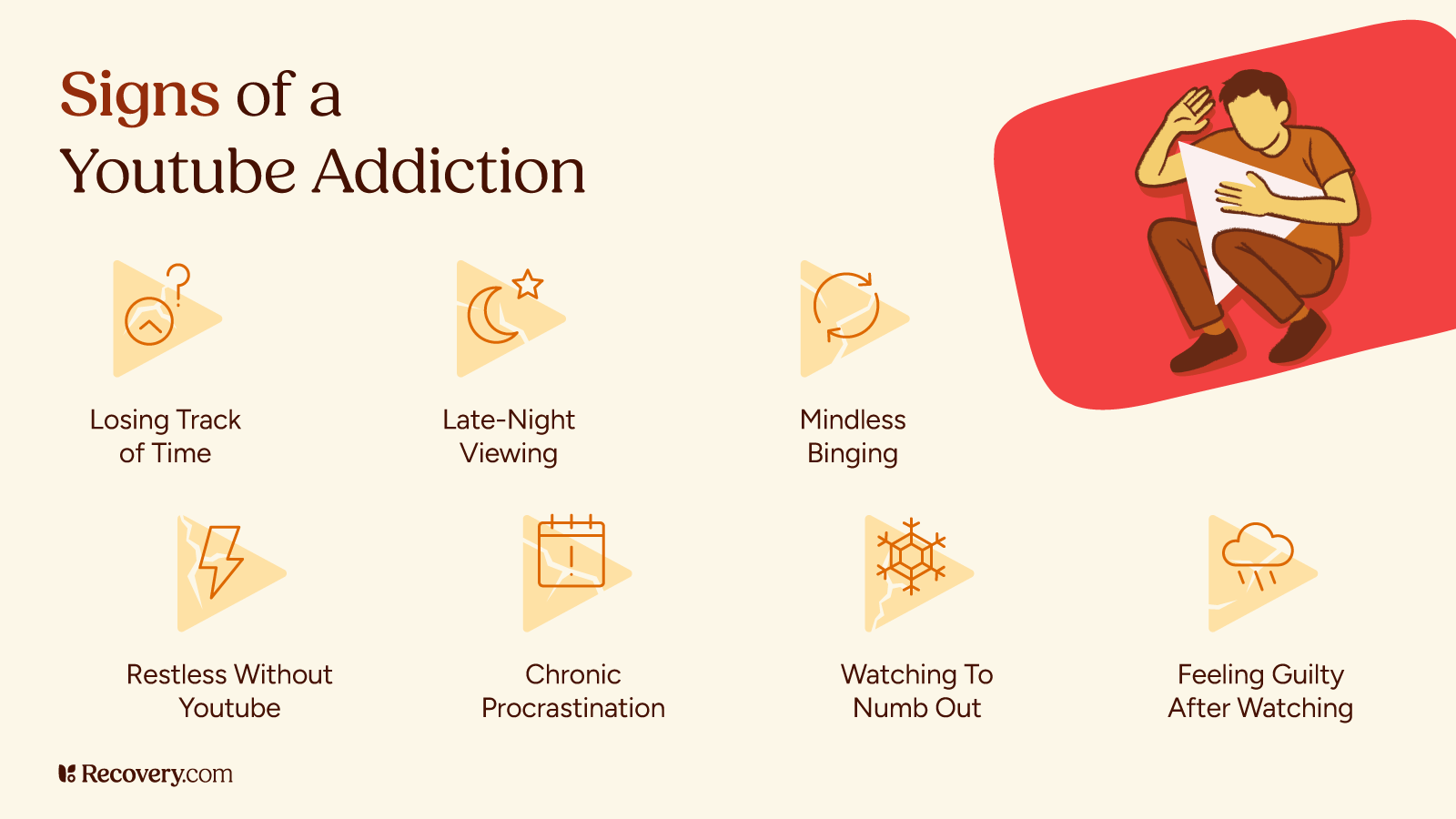
Infographic titled Signs of a YouTube Addiction showing seven warning signs with triangular icons like Losing Track of Time with a clock with question mark, Late night Viewing with crescent moon with star, Mindless Binging with circular arrows, Restless Without YouTube with lightning bolt, Chronic Procrastination with calendar, Watching To Numb Out with snowflake pattern, and Feeling Guilty After Watching with rain cloud. An illustration of a distressed person holding their head is shown on the right.

An Endless Experience 

What makes YouTube viewing tricky to moderate is that the experience is set up to be endless. Unlike traditional media with clear endpoints, YouTube’s infinite scroll, autoplay feature, and personalized recommendations create a continuous stream of content. This design isn’t accidental—it’s specifically engineered to maximize your time on the platform. 

Aza Raskin, the inventor of the infinite scroll, warned the public of social media apps’ addictive potential2 in a 2018 interview with the BBC: 

It’s as if they’re taking behavioural cocaine and just sprinkling it all over your interface and that’s the thing that keeps you coming back and back and back…Behind every screen on your phone, there are generally like literally a thousand engineers that have worked on this thing to try to make it maximally addicting.

Since then, technology has only evolved to make devices even more addictive. This has pronounced impacts on adolescents, for whom “participation in social media platforms3 is an important aspect for ‘social participation,’” says developmental researcher Marie Hattingh.

If you’re struggling with compulsive YouTube use, it’s not a personal failing. The platform uses sophisticated algorithms and psychological principles designed to capture and maintain your attention. Once you understand these viewing patterns as the result of an intentional design and not a lack of willpower, you can shift the focus to regaining control of your media consumption.

Signs You Might Have a YouTube Addiction

Recognizing problematic YouTube use can be harder than you might expect, especially when it feels like such a normal part of daily life. These signs of internet addiction4 can help you assess whether your habits have crossed into concerning territory.

Time Spent on the Platform 

The most obvious indicator is losing track of time while binge-watching YouTube videos. You might sit down to watch something quick, only to find out later that hours have passed without you realizing. Other signs related to spending time include:

  • Staying up late to watch videos when you know you need sleep
  • Consistently spending more time on YouTube than you originally planned to
  • Finding that watching YouTube takes up the majority of your free time
  • Repeatedly ignoring the time limits you set for yourself 
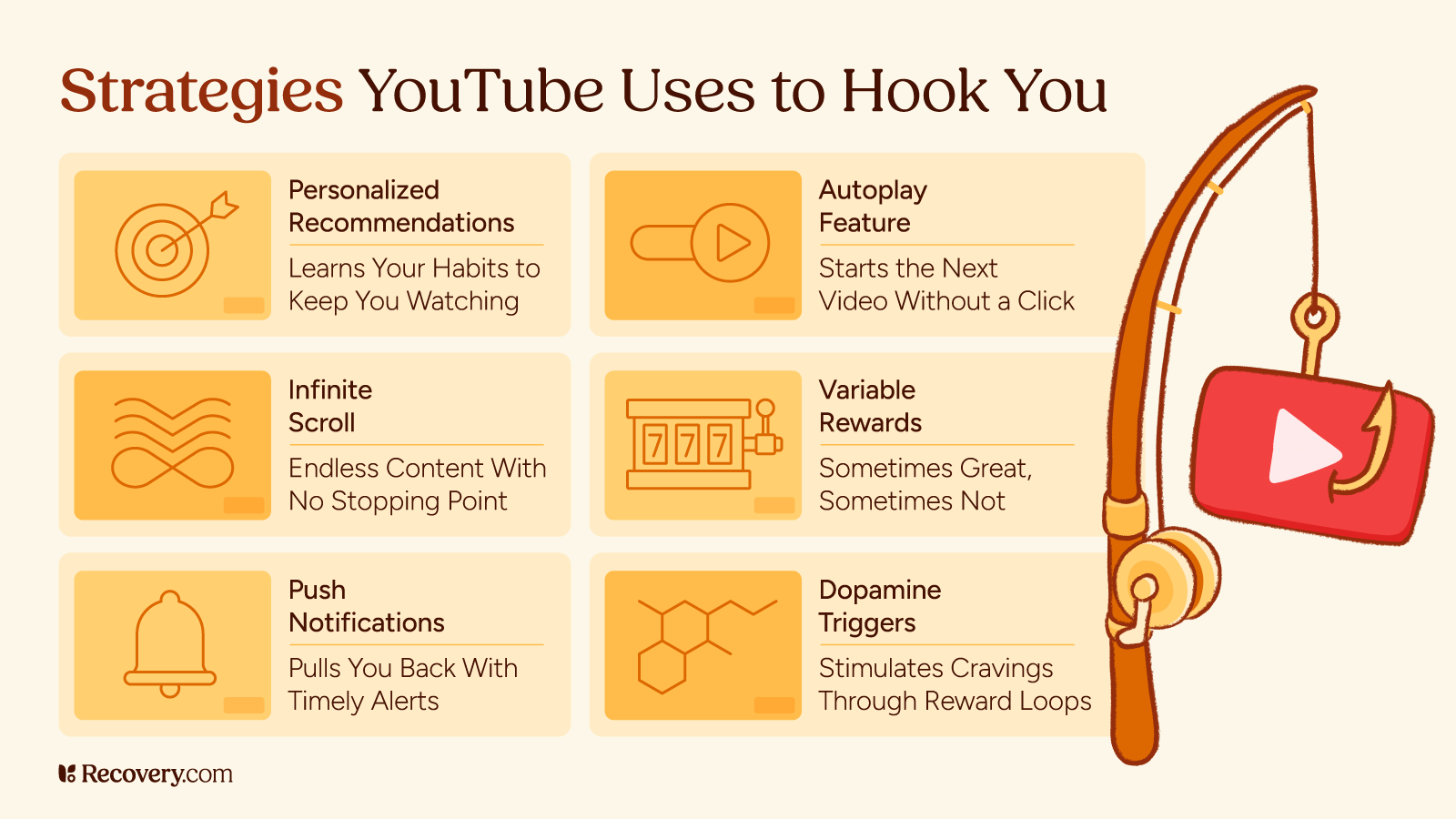
Infographic titled Strategies YouTube Uses to Hook You showing six techniques in orange boxes with icons with Personalized Recommendations like with the target icon) and learns your habits to keep you watching, Autoplay Feature with play button and starts next video without a click, Infinite Scroll with infinity symbol and endless content with no stopping point, Variable Rewards with slot machine and sometimes great, sometimes not, Push Notifications with bell and pulls you back with timely alerts, and Dopamine Triggers with molecular structure, and stimulates cravings through reward loops. A fishing hook with YouTube logo is shown on the right.

Emotional and Behavioral Changes

Pay attention to how you feel when you can’t access YouTube. Emotional and behavioral warning signs include:

  • Feeling anxious, irritable, or restless when YouTube isn’t available (like having cravings or withdrawal symptoms)
  • Compulsively checking for new content throughout the day
  • Continuing to watch even when you’re not enjoying the content
  • Feeling guilty about the amount of time you spend watching but being unable to stop
  • Watching YouTube to avoid dealing with stress, problems, or emotions you’d rather not feel

Effects on Your Daily Life

When YouTube starts to affect your responsibilities and relationships, it’s safe to say it’s a significant problem. This might look like:

  • Procrastinating on work or school assignments because you can’t stop watching videos
  • Declining social invitations to stay home and watch content
  • Neglecting personal care routines like meals, exercise, or hygiene
  • Performance worse at work or school
  • Straining your relationships because you’re spending less time with your loved ones or are distracted during conversations
  • Abandoning (or doing less of) your other hobbies and activities

If several of these signs sound familiar, it may be time to look more closely at your relationship with YouTube. The good news is that recognizing these patterns is the first step toward making positive change.

Why YouTube Can Be So Addictive

Why does YouTube feels so irresistible? Understanding the answer to that can help you have more compassion for yourself and create better strategies for managing your use.

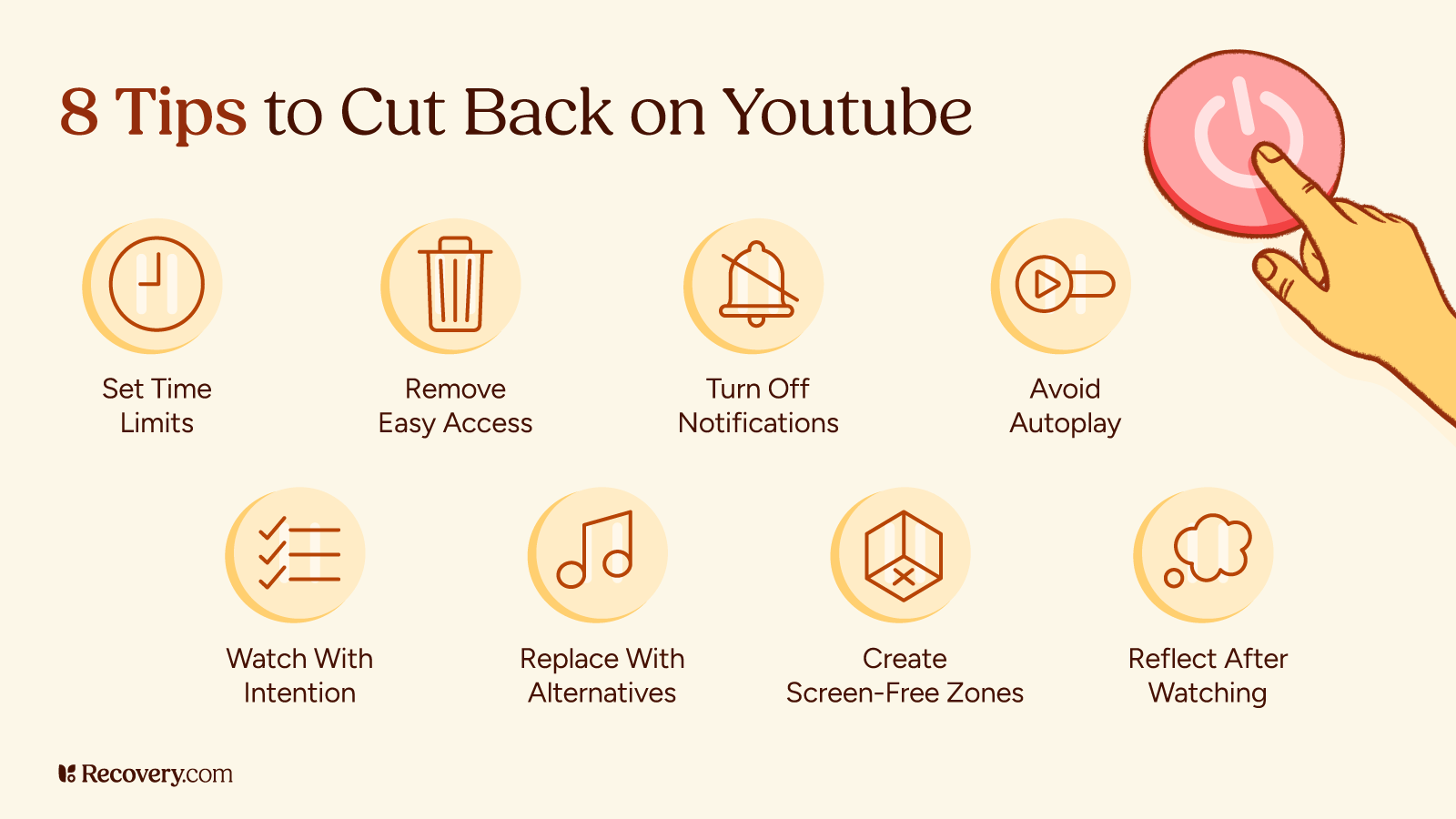
Infographic titled 8 Tips to Cut Back on YouTube displaying eight strategies in circular icons like Set Time Limits with a clock, Remove Easy Access with a trash can, Turn Off Notifications with a crossed-out bell, Avoid Autoplay with a play button with arrow, Watch With Intention with a checklist, Replace With Alternatives with a musical note, Create Screen-Free Zones with a 3D cube, and Reflect After Watching with a thought bubble. A hand reaching toward a power button is illustrated on the right.

The Algorithm

YouTube’s recommendation algorithm5 is incredibly sophisticated, designed to learn your preferences and serve up content that keeps you engaged. The platform tracks everything: which videos you watch completely, where you pause, what you skip, and even how long you hover over thumbnails. This data creates a detailed profile of your interests, allowing YouTube to predict what you’ll want to watch next with incredible accuracy.

The algorithm also employs a technique called reward variability:6 the same gaming technology that makes slot machines addictive. Sometimes the next video is exactly what you want, sometimes it’s just okay, and occasionally it’s disappointing. This unpredictability keeps your brain engaged, always wondering if the next video will be the perfect one.

Guillaume Chaslot, founder of AlgoTransparency, explains how YouTube’s algorithm has toxic effects7 for users:  

It isn’t inherently awful that YouTube uses AI to recommend video for you, because if the AI is well-tuned it can help you get what you want. But the problem is that the AI isn’t built to help you get what you want—it’s built to get you addicted to YouTube. Recommendations were designed to waste your time.

This also poses wider issues as divisive and sensational content (like conspiracy theories and fake news) is often what keeps people engaged longest, and therefore gets recommended more often. This tendency to push people further into rabbit holes and information siloes has the effect of radicalizing people who may already be socially isolated or struggling with their mental health, while also enabling patterns of denial and confirmation-seeking that can prevent personal growth and healthy coping. 

“Rewiring” Your Brain: Impacts on Your Dopamine Reward System

Every time you find a video you enjoy, your brain releases dopamine: the neurotransmitter associated with pleasure and reward. YouTube’s endless stream of content creates constant opportunities for these dopamine hits, training your brain to crave more. The anticipation of finding something interesting becomes almost as rewarding as actually watching content.

YouTube also provides easy access to parasocial relationships:8 one-sided emotional connections with content creators. These relationships often feel genuine and meaningful, which makes it harder to step away from channels where those connections exist.

The Consequences of YouTube Addiction

Excessive technology use can affect multiple areas of your life, often in ways that become apparent only after the patterns have become ingrained.

Mental Health Effects

Compulsive YouTube use is linked to mental health issues9 like anxiety and depression. The constant stimulation can make it harder to tolerate boredom or quiet moments, making heavy users restless when they’re not consuming content. Constantly comparing your life to the curated content you see online can also grow your feelings of inadequacy or fear of missing out.

Excessive YouTube use also disrupts sleep, as the blue light from screens interferes with your natural sleep cycle and stimulating content keeps your mind active when it should be winding down. Poor sleep then diminishes your self-control,10 creating a cycle that makes it even harder to moderate your YouTube use.

Physical Health Effects

Extended viewing sessions often involve sitting for long periods of time, which can cause back pain, poor posture, and reduced physical fitness. Eye strain from staring at screens for hours can cause headaches, dry eyes, and vision problems. Many people also get “text neck11 from looking down at their phones or poorly positioned screens.

YouTube addiction can also affect eating patterns if you skip meals or snack mindlessly while you’re absorbed in content.

Practical Strategies to Manage YouTube Use

Breaking the cycle of compulsive internet use requires a combination of environmental changes, setting boundaries, and adopting alternative habits.

1. Set Boundaries and Limits

Start by establishing specific times when the use of YouTube is and isn’t allowed. For example, you might implement a no-screens rule during meals, an hour before bedtime, or first thing in the morning. Use your phone’s built-in screen time controls or apps like Freedom, Cold Turkey, or StayFocusd to set daily limits and block access during designated times.

Create physical boundaries by designating certain areas of your home as YouTube-free zones, especially your bedroom. When you do watch, try to choose content intentionally instead of clicking into suggested content. Subscribe to specific YouTube channels you genuinely value and access them directly instead of browsing.

2. Change Your Environment

You can also create barriers to watching YouTube impulsively. Log out of your account when you’re done watching, remove the YouTube app from your phone’s home screen, or delete it entirely and access the platform only through a web browser. Turn off all notifications and unsubscribe from channels that don’t add real value to your life.

Consider changing your default browser homepage to something productive or inspiring rather than a platform that might lead you to YouTube.

3. Find Alternative Activities

Replace YouTube viewing time with real-life activities that easily fit into the same space and give you similar benefits without the addictive potential. If you watch educational content, try podcasts, audiobooks, or online courses with defined endpoints. For entertainment, try reading, playing board games, or engaging in creative hobbies.

Easy physical activities like walking, exercising, or doing household chores can also help redirect restless energy that might otherwise lead to mindless scrolling.

4. Practice Mindful Consumption 

When you do choose to watch YouTube, practice intentional consumption.12 Before opening the platform, decide what specific content you want to watch and how much time you’ll spend. Set a timer to help you stick to your planned viewing duration.

After watching, take a moment to reflect on how the content made you feel and whether it aligned with your values and goals. This reflection can help you make more conscious choices about your YouTube habits.

When to Consider Professional Help

While many people can successfully manage their use of social media through self-help strategies, some situations warrant professional support.

Consider reaching out to a mental health professional if you’ve repeatedly tried to reduce your YouTube usage without success, if your viewing habits are causing problems in your relationships or work, or if you’re using YouTube to cope with underlying mental health conditions like depression or anxiety.

Therapists who specialize in internet and behavioral addictions can provide personalized strategies, help address underlying issues, and support you through the recovery process. Cognitive behavioral therapy (CBT) is particularly effective for internet-related addictions.13 Programs usually use a combination of treatment options.

Support groups, both online and in-person, can also give you access to community and accountability as you work to change your viewing habits.

Find Freedom From Excessive Screen Time

YouTube addiction is a real challenge that affects millions of people, but it’s entirely possible to reprogram your habits. 

You deserve to have a healthy relationship with technology that doesn’t control your life. To take the first step toward making real change, look for an internet addiction treatment center and talk to a specialist today.


FAQs

Q: What happens when I watch YouTube for too long? 

A: Extended YouTube sessions can lead to eye strain, poor posture, disrupted sleep patterns, and neglect of responsibilities. You might also have difficulty concentrating on other tasks and increased anxiety when you’re away from the platform.

Q: How can I stop YouTube addiction? 

A: Start by setting specific viewing limits, removing the app from easy access, turning off notifications, and replacing viewing time with other activities. Create designated screen-free times and spaces, and practice intentional viewing when you do use YouTube.

Q: Is it possible to stop scrolling? 

A: Yes, but it requires consistent effort and the right strategies. Focus on environmental changes, boundary setting, and developing alternative habits. Many people successfully reduce their compulsive YouTube use through gradual, sustainable changes.

Q: How do I know if my YouTube use is problematic? 

A: If YouTube use interferes with sleep, work, relationships, or other important activities, or if you feel unable to control your viewing even though you want to, your use may be problematic. Your well-being is priority. If you’re concerned about your habits, it’s worth addressing them.

Porn Addiction: 9 Signs and How It Impacts Your Well-Being

Porn addiction, like other behavioral addictions, can negatively impact mental health, relationships, and daily life. But how do you know if you have a problem? Are there signs that can help you determine if you or a loved one has a porn addiction?

If this issue impacts you, a loved one, or friend, you are not alone. Recognizing the signs of porn addiction is the first step in seeking professional help and treatment options.

What are the top 10 signs of pornography addiction and how they affect overall well-being?

1. You Can’t Stop

One of the most evident signs of porn addiction is the inability to stop viewing pornography despite repeated attempts. This compulsive behavior can interfere with daily life, relationships, and responsibilities. Individuals may experience withdrawal symptoms,1 such as mood swings and cravings, when trying to cut back.

Research suggests that behavioral addictions like pornography addiction2 activate the same reward pathways in the brain as substance addictions, making compulsive use a serious concern.

Recognizing the signs of porn addiction is the first step toward recovery.

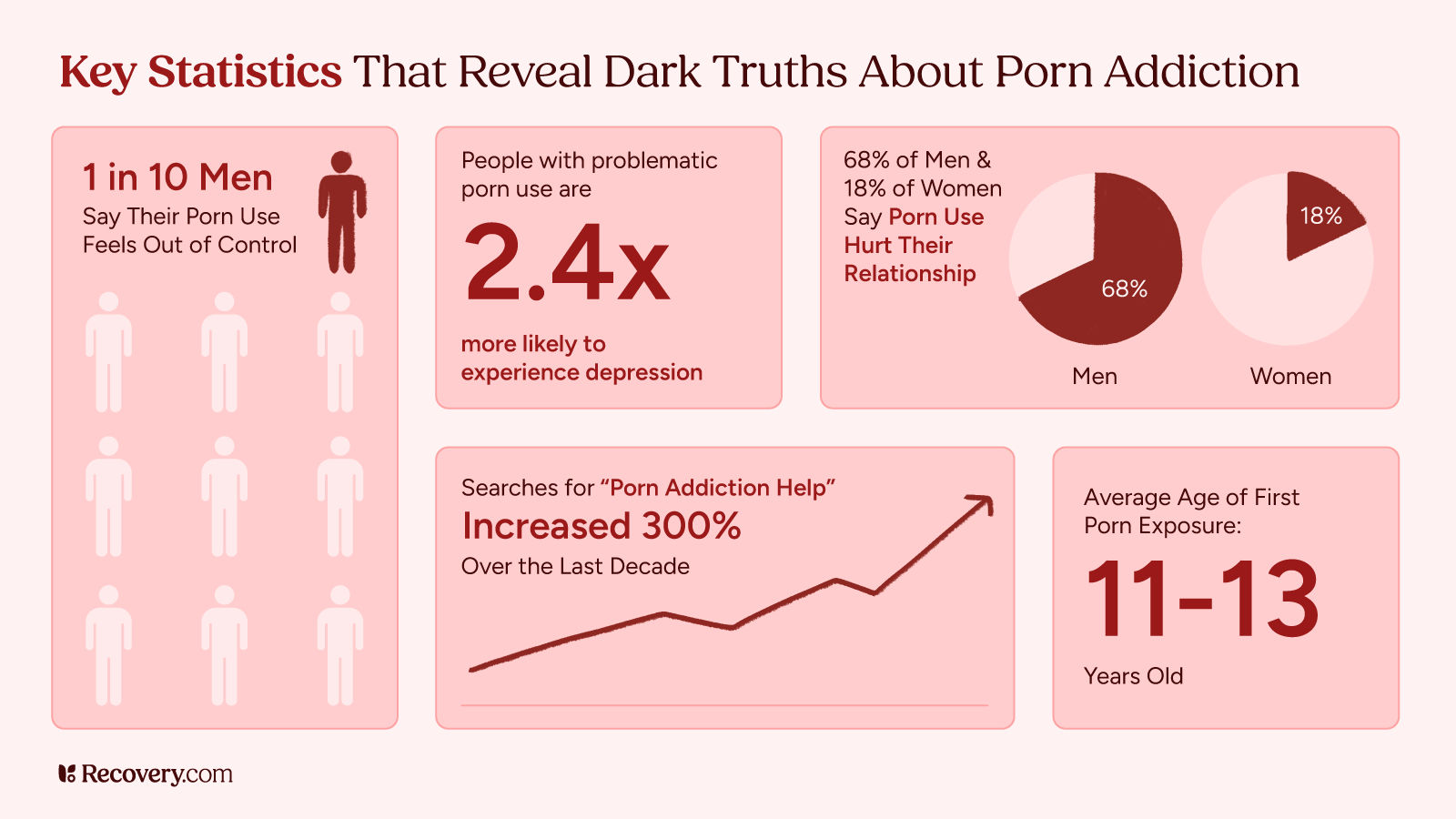
Infographic titled Key Statistics That Reveal Dark Truths About Porn Addiction. Highlights include 1 in 10 men say their porn use feels out of control, problematic porn users are 2.4 times more likely to experience depression, and 68 percent of men and 18 percent of women report porn use hurting their relationships. Other stats show a 300 percent increase in searches for porn addiction help over the past decade, and the average age of first exposure is 11 to 13 years old.

How can I tell if I have a porn addiction?

Like other forms of addiction, porn addiction is primarily marked by a loss of control. Here, an individual’s thoughts, behaviors, and emotions ultimately become consumed by pornography to the point where they begin neglecting other priorities and even people. It often leads to a state of distress whereby even when one wants to take pause and distance themselves, they cannot. Interpersonal relationships, especially romantic or sexual ones, become compromised too, as the obsession with pornography takes priority over real-life interactions and can develop to the point where true physical connection is no longer desirable.

Matt Glowiak, PhD, LCPC, CAADC, ACS, NCC | Hazelden Betty Ford Graduate School

2. You Want More

Pornography consumption can lead to tolerance, similar to substance addiction. Over time, an individual may seek out more explicit or extreme pornographic content to achieve the same level of excitement. This escalation can reinforce dependency and increase the risk of sexual dysfunction.

Social media can also promote unrealistic standards of physical attractiveness and sex, making the lure from these sites to pornographic ones a quick one.

Pornography can create a vicious cycle in the brain, largely due to its impact on dopamine,3 the neurotransmitter responsible for pleasure and motivation.

  • When someone watches porn, their brain releases a surge of dopamine, leading to intense feelings of reward. However, overstimulation can cause the brain to downregulate dopamine receptors4—essentially, reducing their sensitivity to dopamine over time.
  • As a result, the person may start feeling depleted or less satisfied with the same content, leading them to seek out more stimulating material or spend longer periods watching porn to achieve the same high. This is similar to what happens in substance addiction, where repeated exposure leads to tolerance and an increased need for stronger stimuli.5
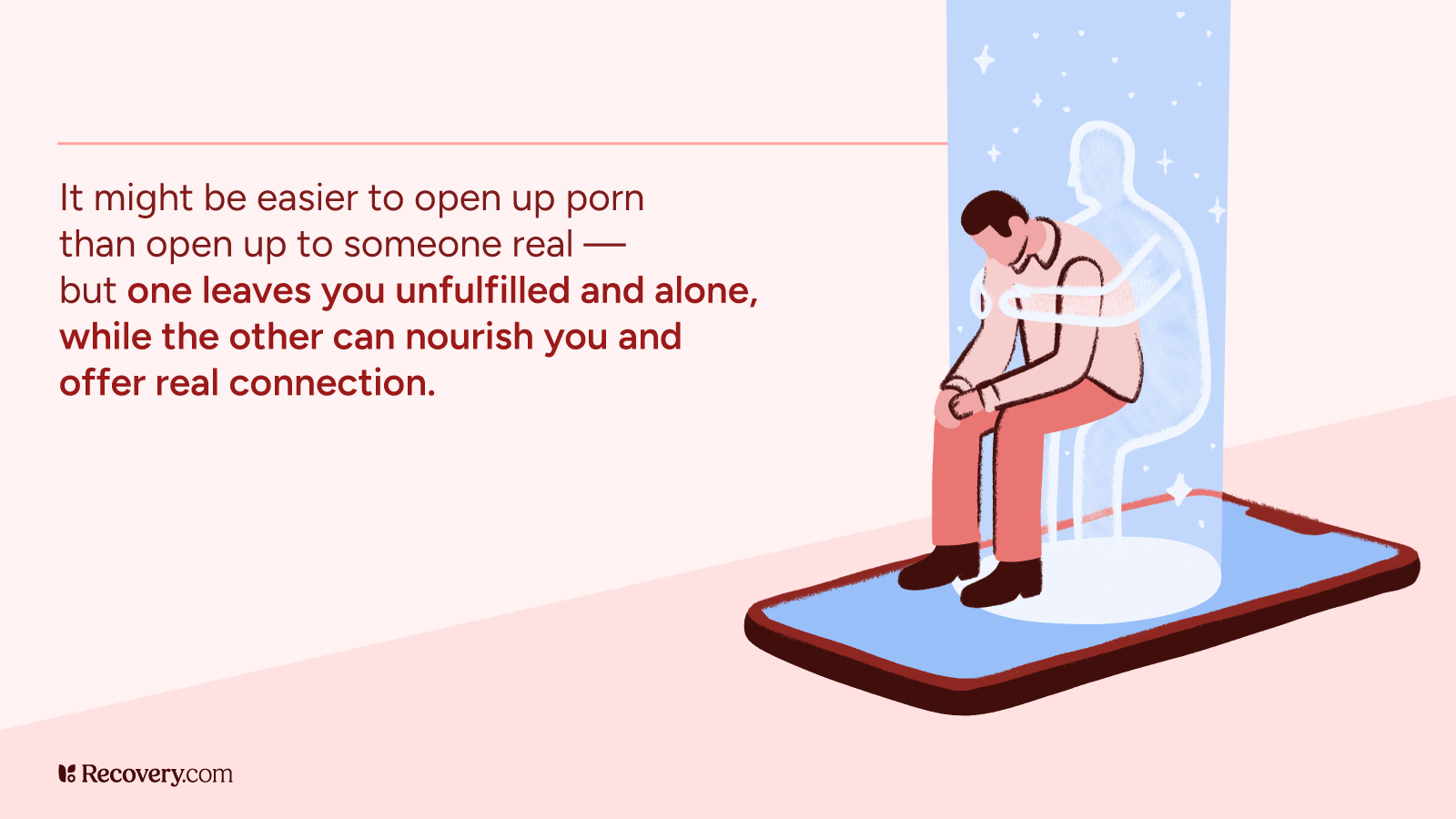
Illustration of a sad man sitting on a smartphone screen, with a glowing silhouette behind him symbolizing emotional connection. Text emphasizes the contrast between porn and real relationships, stating that one leads to loneliness while the other offers true connection.

3. You’ve Lost Time

Pornography use is on the rise due to a number of factors including “accessibility, affordability, and anonymity.”6 Many individuals report losing track of time, which affects productivity, work performance, and personal relationships. Excessive time spent on porn use can lead to neglecting important daily responsibilities.

  • Over time, a pattern of pornography use can make it harder to enjoy everyday pleasures, as the brain becomes wired to seek its dopamine fix through pornography rather than real-life experiences.
  • Some studies suggest that excessive porn use may even contribute to issues like desensitization, difficulty in forming relationships, and sexual dysfunction.
  • In short, by constantly chasing the dopamine high, some people find themselves caught in an escalating loop—needing more extreme content or longer sessions just to feel the same level of excitement, all while their brain becomes less responsive to natural rewards.

4. You’ve Lost Interest in Sex

Frequent viewing of pornographic material can lead to a decline in real-life sexual relationships. Unrealistic expectations created by pornography consumption may result in reduced attraction to a loved one, leading to intimacy issues and relationship problems.

  • The Journal of Sex Research notes that porn websites are more frequently visited7 than any other type of website on the internet and for a longer duration of time.
  • The current market value of the porn industry8 is expected to surpass one billion dollars annually and has experienced a 58% growth in the market since 2018. These are overwhelming statistics that highlight the prevalence and availability of porn that competes with real-life sexual relationships.

5. You’re More Demanding

As porn addiction progresses, individuals may develop unrealistic expectations of sexual activities. They may pressure their partner into engaging in behaviors seen in pornographic content, leading to dissatisfaction and strain in romantic relationships.

  • Porn use becomes a coping mechanism that creates mental health issues and disrupts and replaces natural sexual behavior. While porn addiction is not officially recognized as a diagnosis in the DSM-5 (Diagnostic and Statistical Manual of Mental Disorders, Fifth Edition), it does not mean that it does not significantly impact relationships and cause mental health conditions.
  • While the DSM-5 doesn’t classify it as an addiction, the World Health Organization’s ICD-11 (International Classification of Diseases) does recognize compulsive sexual behavior disorder (CSBD),9 which can include problematic porn use.

So, while there’s still debate over whether “porn addiction” is the right term, research suggests that compulsive porn use can have real effects on mental health and behavior.

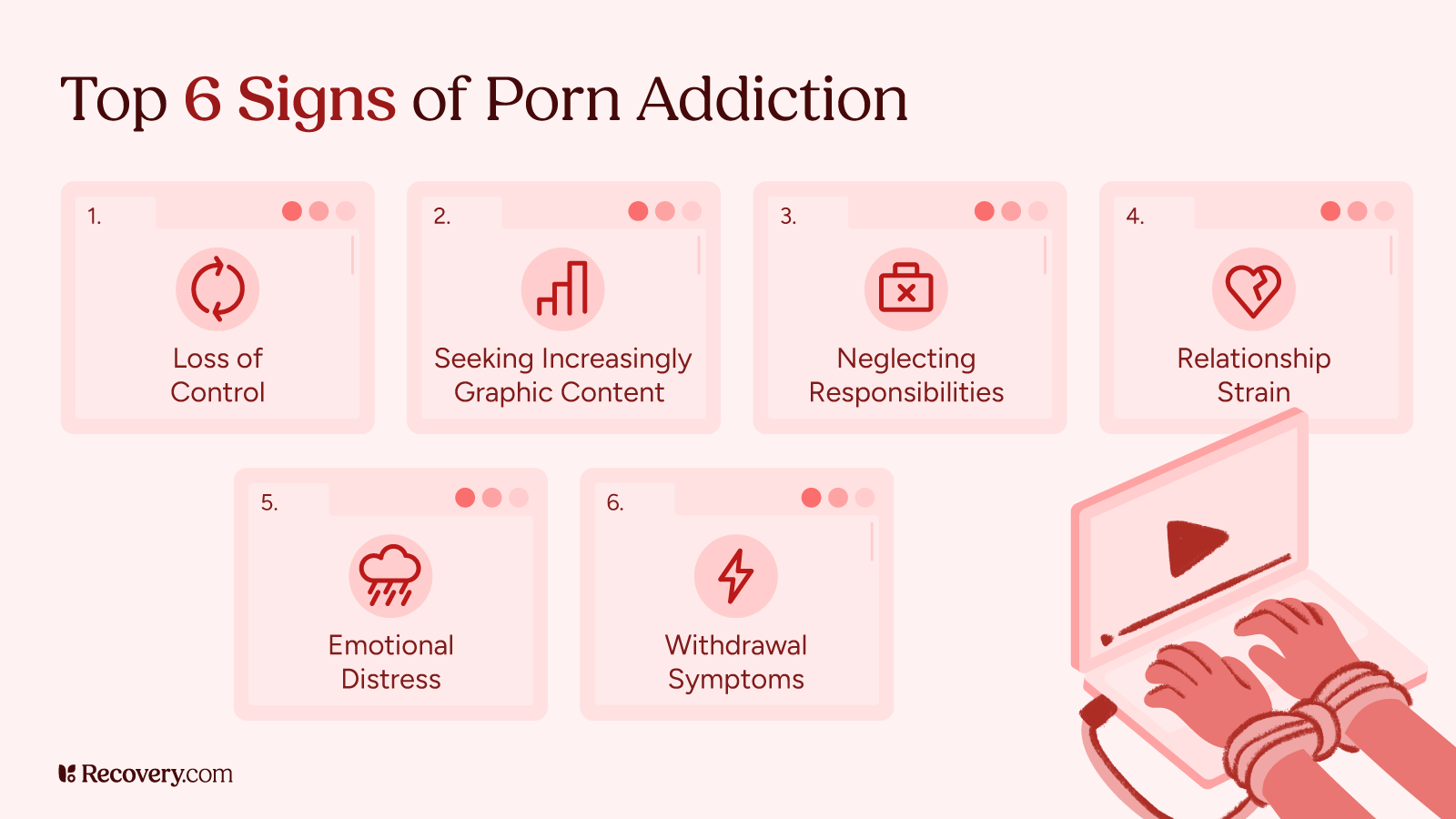
Infographic titled Top 6 Signs of Porn Addiction, listing loss of control, seeking increasingly graphic content, neglecting responsibilities, relationship strain, emotional distress, and withdrawal symptoms. Each sign is shown in a web browser-style box. A graphic on the right shows hands tied to a laptop, symbolizing compulsive use.

What is the difference between sex addiction and pornography addiction?

Sex and porn addiction both involve compulsive sexual behaviors that manifest differently. Sex addiction typically includes a pattern of seeking out sexual experiences (such as multiple partners, risky encounters, or excessive masturbation) despite negative consequences. Porn addiction, which is a subset of sex addiction, is characterized by compulsive pornography use that interferes with relationships, work, or emotional well-being. Both can stem from deeper emotional or psychological struggles, and addressing them often requires exploring underlying issues, developing healthier coping strategies, and developing meaningful connections.

Andrew J. Schreier, ICS, CSAC, LPC, ICGC-II, BACC

6. You’ve Lost Attraction

Another warning sign of porn addiction is a loss of attraction to a romantic partner. The overstimulation of the brain’s reward system due to frequent viewing of pornography7 can alter real-life perceptions of beauty and desirability, affecting the ability to maintain healthy relationships.

  • Sexual health is impacted in a way that influences romantic relationships in real life. Social media can also play a role in disrupting healthy, human relationships. Struggling with porn addiction can also lessen the amount of time spent with partners in romantic relationships.
  • Young adults are also impacted by symptoms of porn addiction like mental health disorders and low self-esteem.

7. You’re Losing Money

Some people who struggle with pornography addiction may spend significant amounts of money on subscriptions, premium content, or even engaging in online sexual activities.

This financial strain can impact daily life, leading to stress and potential conflicts with a family member or loved one. Use of pornography can also have a heavy financial burden, with some sites requiring increasing fees for use.

8. You’re Distracted

In today’s digital age, pornography is more accessible than ever, making it easy to develop compulsive behaviors without realizing the impact on mental health, relationships, self-esteem, and daily life.

While many people consume porn casually, for some, it becomes a habit that feels impossible to break. If you’ve ever found yourself struggling to stop, needing increasingly explicit content, or noticing a decline in real-life intimacy or continual distraction, you’re not alone.

Porn addiction can make it difficult to focus on tasks, leading to decreased productivity and performance at work or school. Individuals may frequently think about viewing porn, leading to an inability to concentrate on important responsibilities.

How can pornography addiction get in the way of my everyday life?

Pornography addiction goes beyond casual viewing—it consumes your time and energy affecting your work, relationships, and mental well-being. The constant need for stimulation rewires your brain creating unrealistic expectations and making real-life intimacy feel unfulfilling. Over time, isolation, secrecy, and shame take over, leading to withdrawal from loved ones and neglect of personal growth. True wellness comes from balance, and breaking free from addiction means reclaiming control over your time, relationships, and sense of self.

Rebecca E. Tenzer MAT, LCSW, CCTP, CGCS, CCATP, CCFP, CIMPH | Astute Counseling & Wellness Services

9. You’re Angry

Feelings of guilt, shame, and frustration can contribute to increased irritability and anger in individuals struggling with pornography addiction. Withdrawal symptoms from excessive porn use may lead to mood swings, emotional instability, and relationship problems.

Research suggests that when people become deeply engrossed in internet pornography, their brains react in a way similar to substance addiction8—certain neural pathways light up, triggering a direct and intense response to the content.

  • Just like in drug addiction, watching porn releases a surge of dopamine, the brain’s pleasure and reward chemical, reinforcing the habit and making it harder to stop.
  • However, over time, dopamine receptors become less responsive, meaning the same content no longer provides the same thrill. This can lead to frustration, irritability, and even anger issues, especially when a person tries to cut back or when real-life experiences don’t match the high of pornography.

Some studies even link compulsive porn use to emotional dysregulation, making individuals more prone to mood swings and impulsivity.

In extreme cases, this cycle of addiction and emotional instability can increase aggression, particularly when someone experiences withdrawal-like symptoms from trying to quit or faces obstacles to accessing porn. This makes it even harder to break free from the cycle, as stress and negative emotions can push them back toward their habitual coping mechanism—watching more porn.

Talking About Porn Addiction

Discussing pornography addiction can be challenging, especially for individuals who experience feelings of guilt or shame. Support groups such as
Sex and Love Addicts Anonymous (S.L.A.A.) can provide a safe space for people to share their struggles and receive guidance from others who have faced similar challenges.

Porn addiction is often linked with other behavioral addictions and substance use disorders, such as alcohol addiction and drug dependency.

Research suggests that behavioral addiction, like pornography addiction, affects the same brain regions10 as substance addiction, reinforcing compulsive behavior.

Seeking Treatment and Recovery

Overcoming pornography addiction requires a combination of self-awareness, support, and professional intervention. Treatment options such as CBT, psychotherapy, and addiction treatment programs can help individuals break free from compulsive pornography use and improve their quality of life.

Recognizing the signs of porn addiction is the first step toward recovery. By seeking help and implementing positive changes, individuals can restore their well-being, maintain healthy relationships, and regain control over their lives.

Porn addiction can feel isolating, but recovery is possible with the right support and strategies. Recognizing the signs of problematic use is the first step toward making meaningful changes. Help and treatment are available.

Overcoming compulsive pornography use isn’t just about quitting—it’s about regaining control, rebuilding healthy relationships, and improving overall well-being.

If you or someone you know is struggling, seeking help is a courageous step toward a healthier and more fulfilling life. Explore porn addiction rehabs now and speak to an admissions specialist today.


FAQs

Q: What is porn addiction?

A: Pornography addiction, also known as problematic pornography use (PPU), is characterized by an individual’s inability to control their consumption of pornographic material, leading to significant distress or impairment in personal, social, or occupational areas of life. This compulsive behavior persists despite negative consequences.

Q: What are 5 warning signs of addiction?

A: Identifying addiction involves recognizing certain behavioral patterns. Five warning signs include:

  1. Preoccupation: Constantly thinking about engaging in the addictive behavior.
  2. Loss of Control: Unsuccessful attempts to reduce or stop the behavior.
  3. Tolerance: Needing increasing amounts of the behavior to achieve the desired effect.
  4. Withdrawal: Experiencing negative emotions or physical symptoms when unable to engage in the behavior.
  5. Neglecting Responsibilities: Prioritizing the behavior over important personal or professional obligations.

Q: What does porn addiction do to your brain?

A: Chronic consumption of pornography can lead to neurobiological changes similar to those observed in substance addictions. These changes may include altered brain structure and function, affecting areas related to reward, motivation, and decision-making. Such alterations can reinforce compulsive viewing behaviors and diminish sensitivity to natural rewards.

Q: How to treat pornography addiction?

A: Effective treatment approaches for pornography addiction often involve:

  • Psychotherapy: Cognitive Behavioral Therapy (CBT) has been shown to reduce the severity of PPU and associated symptoms like anxiety and depression.
  • Support Groups: Participating in peer support groups provides community support and shared coping strategies.
  • Medication: In some cases, pharmacotherapy may be considered as part of a comprehensive treatment plan.

A combination of these approaches is often recommended for optimal outcomes.

Q: What causes problematic pornography use?

A: The development of problematic pornography use can be influenced by various factors, including:

  • Psychological Factors: Stress, anxiety, and depression are strongly related to increased pornography consumption.
  • Behavioral Factors: Habitual use as a coping mechanism for negative emotions or boredom.
  • Social Factors: Exposure to environments where pornography use is normalized or encouraged.

Understanding these underlying causes is crucial for effective intervention and treatment.

Q: What is the difference between sex addiction and pornography addiction?

A: While both involve compulsive sexual behaviors, they differ in focus:

  • Sex Addiction: Encompasses a broad range of compulsive sexual activities, including promiscuity, excessive masturbation, and risky sexual behaviors.
  • Pornography Addiction: Specifically relates to the compulsive consumption of pornographic material, often leading to isolation and neglect of real-life relationships.

Both conditions can co-occur and may require similar therapeutic approaches.

Q: How can pornography addiction affect your mental health?

A: Problematic pornography use is associated with various mental health challenges, including:

  • Increased Anxiety and Depression: Excessive use can exacerbate feelings of anxiety and depression.
  • Cognitive Distortions: Developing unrealistic expectations about sex and relationships.
  • Emotional Distress: Feelings of guilt, shame, or hopelessness related to one’s behavior.

Addressing these mental health issues is a critical component of comprehensive treatment.

Q: How can I tell if I have a pornography addiction?

A: Self-assessment questions to consider:

  • Frequency: Do you spend a significant portion of your time engaging with pornography?
  • Control: Have you tried to cut back without success?

Dopamine and Addiction: How Your Brain’s Reward System Changes in Addiction and Recovery

Addiction changes how the brain functions. It especially impacts the brain’s “reward system,” which is largely based on dopamine. This hormone is responsible for our pleasure response, along with other important functions like memory, attention, and mood.

Understanding addiction is an important part of recovery. Knowing there’s a physiological reason for your addiction can relieve some of the shame around it, so you can move forward in your healing journey. And gaining perspective on what’s driving your behavior can help you make lasting change.

A Peek Inside the Brain’s Reward System

We can experience pleasure from all kinds of activities, whether it’s exercise or scrolling social media. Our brain’s reward system is responsible for that feeling, and the desire to seek more of it.

How It Works

Your brain produces a chemical called dopamine. Dopamine is both a hormone and a neurotransmitter, meaning it’s used to send messages between your nerve cells. It’s tied to many functions, from mood regulation and memory to learning. It’s known as the “feel-good” chemical for the large role it plays in pleasure and motivation.

Dopamine is released along different neural pathways1 when we anticipate and experience something pleasurable. As it’s released, it affects dopamine receptors that live along these pathways, resulting in feelings of euphoria or happiness. This is known as the reward circuit.

The reward circuit activates areas of the brain that relate to focus, learning, taking action, and motivation.

The brain builds connections between a stimulus and pleasure2 that follows. Your reward circuit strengthens each time this process occurs. The more frequently it happens, the stronger your response is. Also called a reinforcing effect,3 it’s involved in how we form habits.

Cues leading up to pleasure are important. Dopamine makes us pay attention to markers that lead to a reward. This means dopamine activates before you even engage in a pleasurable activity.

This system helped early humans survive by rewarding beneficial behaviors, like eating. When it’s in balance, it allows us to stay focused, motivated, and happy. Dopamine imbalance is linked to mental health issues, like depression, and substance use disorders.

The Reward System at Different Stages of Addiction Recovery

Substances bypass the body’s natural dopamine production by directly flooding the reward system with it. Some substances, like opioids, stimulants, alcohol, and nicotine, do this more intensely than others.

Stimulants like cocaine can release up to 10 times the amount of dopamine4 your body would naturally produce.

The Early Stages of Substance Use

The first time a substance is used, it creates a direct dopamine response. This intensity of this varies from person to person. According to neurotheology specialist Dr. Cyrus H. McCandless, “you can never accurately predict how much reward you’re going to get.”5

Your brain remembers everything leading up to a reward, so it can repeat the experience. This drives the desire to use more of a substance. As dopamine levels go up, serotonin, which helps us feel satisfied, goes down. This creates a cycle of wanting more while feeling less satiated.

This cycle doesn’t just apply to substance use. Altered dopamine pathways are seen in behavioral addictions,6 including gambling, shopping, and sex.

Building Tolerance

Usually, brain chemistry returns to normal after a dopamine release. But continued substance use surges the brain with dopamine until it becomes overstimulated. Over time, the body wants to balance out, so it shuts down dopamine receptors. As a result, we won’t feel the same high from using the same amount of substances as before. This is how the brain builds tolerance.7

Addiction

The Diagnostic and Statistical Manual of Mental Disorders, Fifth Edition (DSM-5) has 4 criteria for classifying and diagnosing substance use disorders:8

  • Impaired control
  • Social impairment
  • Risky use
  • Pharmacologic traits

The reward system plays a significant role in these.

Substances artificially change dopamine production. This can signal to the brain that substances are more important than other natural rewards. Eventually, natural rewards become less exciting and the brain learns to value substances9 above all else.

Neuroplasticity, or the brain’s flexibility,10 also plays a part in addiction. We can get used to higher levels of dopamine following prolonged substance use. But an overstimulated brain no longer produces as much of it. Instead, it relies on substances.

Withdrawal

It’s not possible to keep up substance-induced levels of dopamine at all times. Drops in dopamine levels can contribute to withdrawal symptoms including but not limited to:

  • Depression
  • Anxiety
  • Cold sweats
  • Headaches

For many people, detox is the first step in the recovery journey. As substances leave your system, your body and brain recalibrate. Low dopamine levels during withdrawal can make this process difficult. But thanks to neuroplasticity, we can nurture our brain chemistry back to normal over time.

Note: Depending on the substance, detox can be life-threatening and shouldn’t be attempted alone.

How Long Does It Take for the Reward System to Recover?

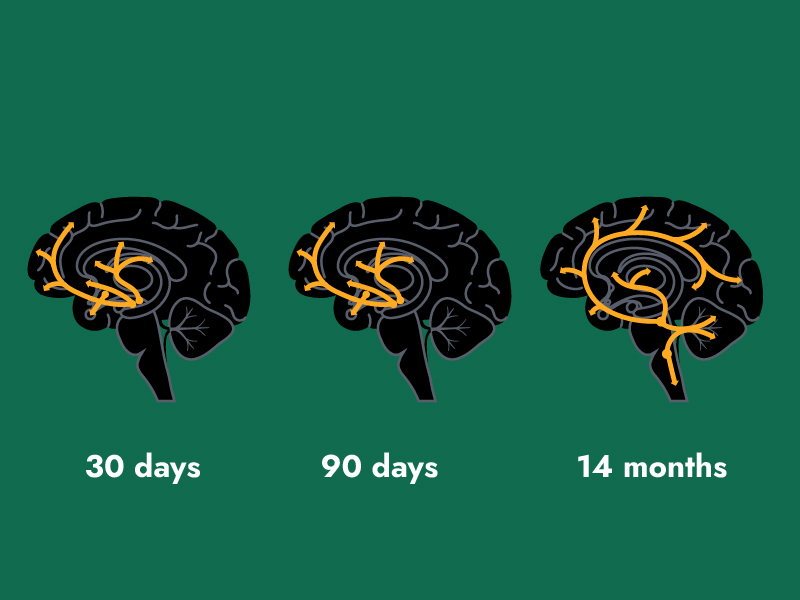
Each person has different levels of dopamine and dopamine receptors.11 The time it takes for the reward system to return to normal after prolonged substance use varies. Factors like the type of substance and level of use will impact recovery time. In general, it takes the brain up to 14 months to recover.

brain recovery timeline

30 Days of Abstinence

Brain scans show significant improvement and more dopamine receptors in just one month of abstinence from methamphetamine.12

90 Days of Abstinence

Brain scans in one study showed no significant difference in dopamine receptors following 90 days of abstinence13 compared to 30 days. This indicates that recovery is possible, but it takes time.

14 Months of Abstinence

The brain’s reward circuit, including dopamine receptor levels, returns to nearly normal after 14 months of abstinence.14

Repairing Your Brain in Recovery

The human brain is capable of amazing things, including the ability to modify and change throughout your lifetime. For many, it’s comforting to know that changes to the brain caused by substance use disorder are reversible. Your brain can repair and heal, if you facilitate its healing.

To start your path to a brain-healthy, substance-free life, search for a treatment program that matches your needs and reach out to them directly today.