Video Games and Depression: Gaming’s Impact on Mental Health and Wellness

If you’ve ever felt like gaming is the only thing that helps you cope or noticed that your loved one is spending more and more time in front of a screen, you’re not alone.

For some, video games are a welcome escape. They offer structure, connection, and a break from stress. But for others, especially teens and young adults, that escape can become a lifeline; and eventually, a source of distress.
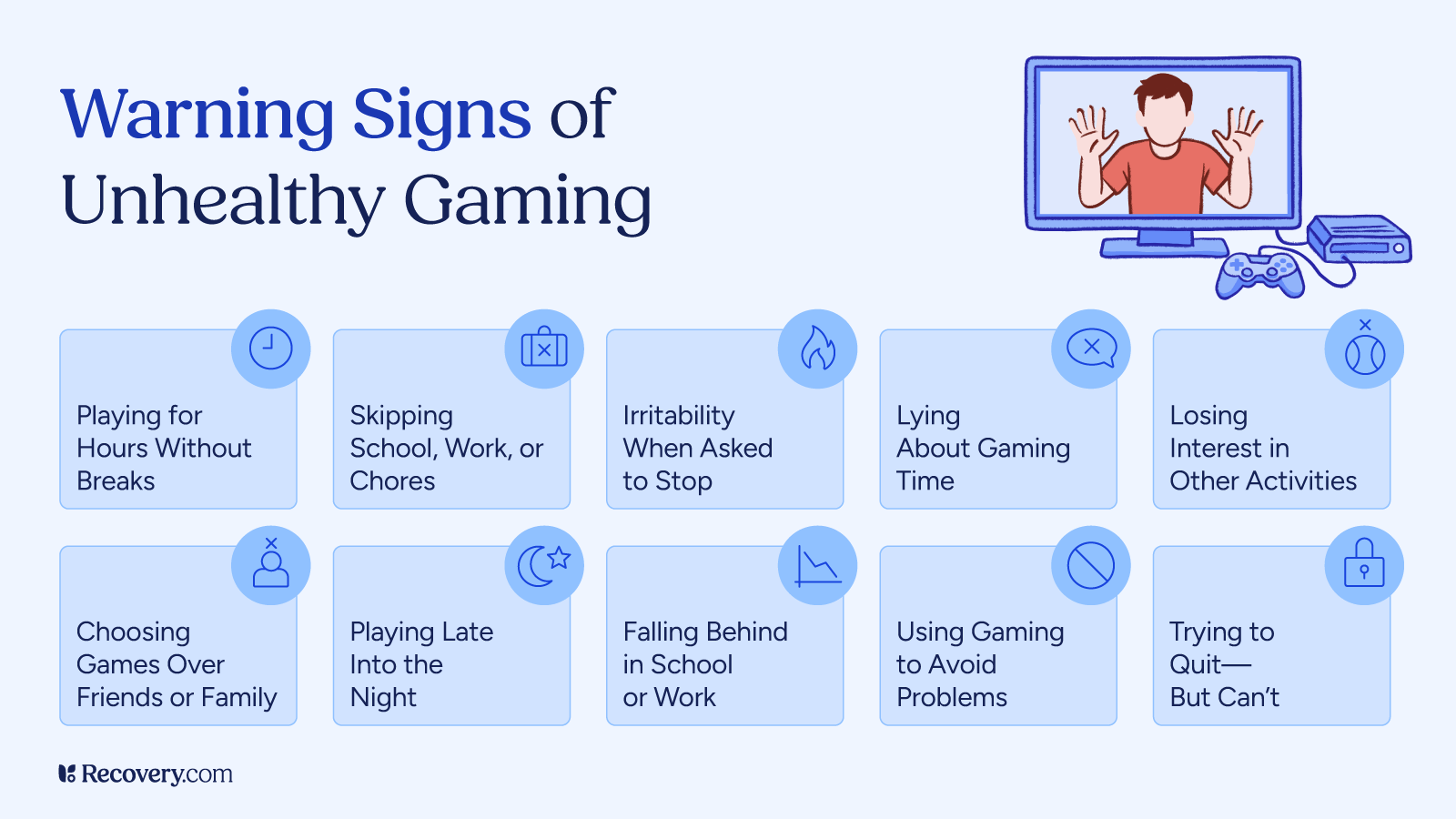
Infographic titled Warning Signs of Unhealthy Gaming listing signs such as playing for hours without breaks, skipping responsibilities, irritability when asked to stop, lying about gaming, losing interest in other activities, choosing games over friends or family, playing late into the night, falling behind in school or work, using gaming to avoid problems, and trying to quit but being unable to. Includes a cartoon of a distressed person and gaming controller icons.

Gaming disorder1 is real and it can impact mood, motivation, relationships, and overall mental health. But video games aren’t all bad. In fact, some can be used intentionally to support healing and emotional well-being.

This guide will help you explore the full picture: the benefits of gaming when used in moderation, the risks of excessive screen time, and how to recognize when it’s time to seek help. Whether you’re a parent concerned about your teen or someone wondering if your own gaming habits have crossed a line, you’re in the right place.

You don’t have to figure it out alone. There’s support and there are healthy ways forward.

Video Games and Mental Health

Many people use gaming as a way to unwind, pass time, or escape stress. But when screen time starts to interfere with sleep, relationships, or mental health, it may signal a deeper issue.

While some games are designed with mental health goals in mind, including titles used to treat attention-deficit hyperactivity disorder (ADHD)2 or support emotional processing, these remain the exception. A growing body of research warns of the risks: disrupted sleep, social withdrawal, low mood, and symptoms of anxiety or depression.

If you’re feeling stuck in a cycle of compulsive gaming or watching someone you care about struggle to log off, there is help. This guide will walk through what we know about the mental health impact of video games, what warning signs to watch for, and how to get support that actually works.
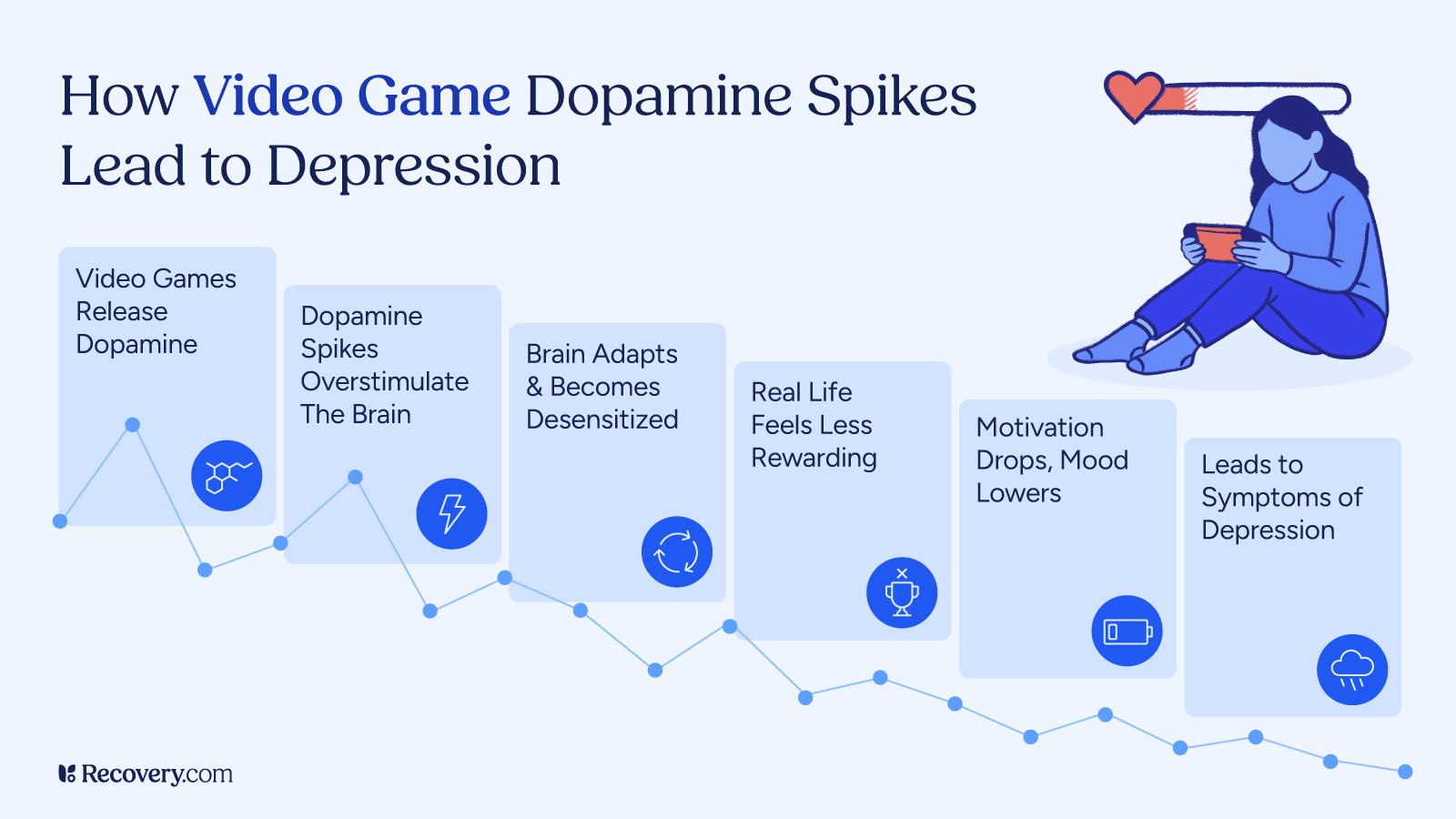
Infographic titled How Video Game Dopamine Spikes Lead to Depression, showing a step-by-step process where video games release dopamine, overstimulate the brain, cause desensitization, make real life feel less rewarding, lower motivation and mood, and ultimately lead to symptoms of depression. Includes a graph line and illustration of a person sitting alone holding a tablet.

Limited Benefits of Video Games for Mental Health

When used intentionally and in moderation, video games can offer mental health benefits. Certain games promote problem-solving, strategic thinking, and creativity.

Multiplayer and cooperative games can foster social connection, teamwork, and communication, which are especially valuable for teens who may struggle with in-person interactions. 

Some games are designed to teach stress management, emotional regulation, and mindfulness, offering interactive ways to practice coping skills. Video games can provide a temporary escape from daily stressors, allowing teens to relax and decompress in a safe and controlled environment.

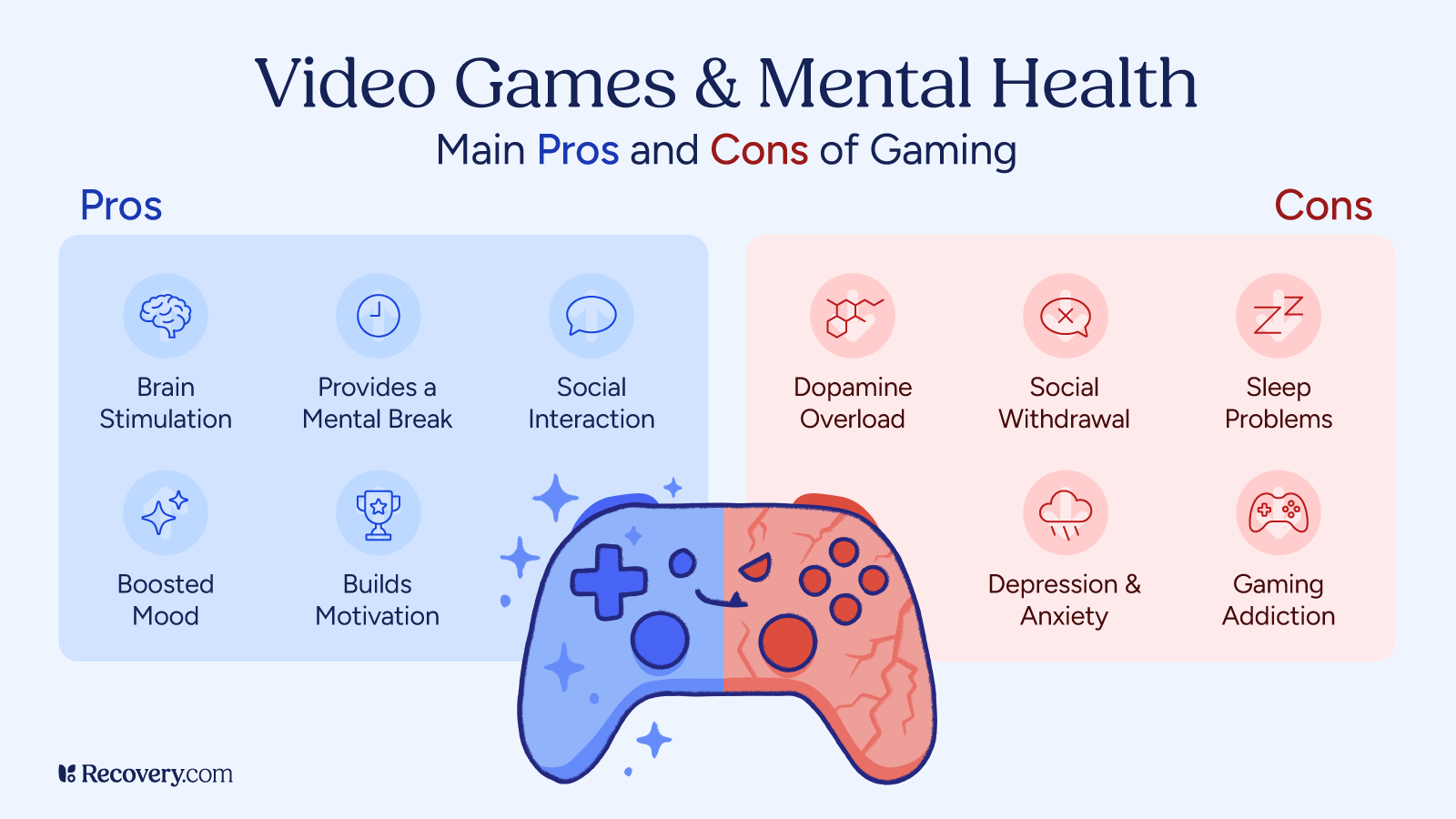
Infographic titled Video Games & Mental Health: Main Pros and Cons of Gaming, showing benefits like brain stimulation, mental breaks, social interaction, boosted mood, and motivation, alongside risks such as dopamine overload, social withdrawal, sleep problems, depression, anxiety, and gaming addiction. A game controller graphic is split between blue (pros) and red (cons).

Consequences of Excessive Gaming

While moderate gaming can be beneficial, excessive gaming4 may lead to negative mental health outcomes and can contribute to mental disorders. Often teens use gaming as a way to provide entertainment, social engagement, and cognitive stimulation, excessive gaming presents significant risks for teenagers. 

Adolescence is a critical time for emotional, social, and neurological development, and overuse of gaming can interfere with these processes. One of the primary concerns is the potential for addictive behaviors.

Excessive gaming can lead to compulsive use5 and gaming disorder, a condition recognized by the World Health Organization that involves prioritizing gaming over other important activities and losing control over gaming habits.

Additionally, research has linked heavy gaming to increased symptoms of depression,6 anxiety, irritability, and mood instability. Many teens may also turn to gaming as an unhealthy coping mechanism to avoid dealing with real-life stressors. 

Prolonged gaming, especially late at night, can disrupt sleep patterns, leading to fatigue, reduced concentration, and declining academic performance. While some games offer social interaction, spending too much time gaming can lead to social isolation and weaken teens’ face-to-face communication and relationship-building skills. Isolation leads to depression7 as socializing is a key factor in positive mental health.

Physically, long hours of sedentary gameplay can contribute to poor posture, eye strain, and a lack of physical activity, increasing the risk of obesity and other health issues.

Although gaming in moderation can be part of a healthy lifestyle, it is important for parents, educators, and mental health professionals to help teens set healthy boundaries, balance screen time with other activities, and engage in open conversations about the impact of gaming on mental and physical health.

Neurological Impact of Gaming

The question “Do video games cause depression?” is frequently debated in psychiatry and mental health research. The answer is complex.

While video game playing does not inherently cause depressive disorders, excessive gaming—particularly when it replaces real-life engagement or becomes compulsive—can increase the risk of developing mental health conditions,8 especially in adolescents and young adults.

Excessive video game use affects key neurotransmitters responsible for mood, motivation, and reward. When teens engage in video gaming, particularly for extended periods, their brain’s reward system becomes highly activated, primarily through the neurotransmitter dopamine.9

Dopamine and the Reward System

Video games are designed to deliver frequent, predictable rewards (like leveling up, winning points, or unlocking achievements), which trigger the release of dopamine. Dopamine is the “feel-good” chemical in the brain that reinforces behaviors by making them feel pleasurable.

In teens, whose brains are still developing, this can lead to a heightened sensitivity to rewards and novelty, making gaming especially enticing and habit-forming.

Neurotransmitter Dysregulation

While occasional dopamine release is healthy, chronic overstimulation through excessive gaming can lead to dopamine desensitization. This means the brain becomes less responsive to dopamine over time, requiring more stimulation to achieve the same pleasurable effect.

As a result, real-life activities like school, socializing, or hobbies may feel less rewarding, contributing to symptoms of low mood, irritability, depression, and anxiety. 

Teens begin to develop a constant craving for the dopamine “feel-good” rush that gaming provides. However, in everyday life, our brains don’t naturally produce dopamine in the same high quantities or with the same frequency as video games do. It can become an addictive feeling to need constant dopamine fix.

Effects on Mood and Emotional Regulation

Video games can artificially spike dopamine but fail to teach the brain how to manage serotonin, GABA, and norepinephrine, neurotransmitters involved in emotional regulation, relaxation, and focus.

This imbalance can make teens more prone to emotional instability, stress, and difficulty managing real-life challenges without gaming as an escape.

  • Dopamine Dysregulation: Video games trigger dopamine release—the brain’s “reward chemical”—creating a feedback loop similar to other behavioral addictions.
  • Reduced Serotonin Activity: Serotonin may be negatively affected by poor sleep, lack of physical activity, and social isolation.
  • Cortisol and Stress Response: High-stakes or violent video games may elevate cortisol, impacting emotional stability, anxiety and depression.
  • Decreased Prefrontal Cortex Activity: Prolonged gaming reduces prefrontal activity, affecting impulse control and executive functioning, and mirroring attention deficit symptoms.

Video games are more than just entertainment. They can have a real impact on mental health, including depression. But remember, support is available.

At Recovery.com, you can find treatment programs that understand the unique role technology and gaming play in mental health. 

If you’re ready to take the next step, explore personalized treatment options near you that offer compassionate care, real solutions, and a path forward.


FAQs

Q: Are violent video games harmful to mental health?

A: The impact varies among individuals; some studies suggest a link between violent games and increased aggression,10 while others find no significant effects. What we do know is that video games certainly can impact mood.

Q: How much gaming is considered excessive?

A: Gaming becomes excessive when it interferes with daily responsibilities and leads to negative consequences in various aspects of life. If they are constantly choosing gaming over other things it may be time to reach out to a professional.

Q. How can I help my teen with excessive gaming?

A: Start to monitor their time spent online. Have limits and enforce them. Enable screen time so they have to take breaks and encourage other activities outside of the home.

Q. What should I do if I think video games are impacting my loved one’s mental health?

A: If you are concerned about your loved one’s mental health, it’s always a good idea to consult a professional. Search for someone who works with teens, has experience with the areas of your concern (depression, anxiety, ADHD) and gaming addictions.

Understanding Process Addiction: Types, Symptoms, and Treatment

When we think of addiction, we usually think of drugs or alcohol. But did you know you can also become addicted to certain behaviors? 

Process addiction, also known as behavioral addiction, is an addiction to behaviors like eating, shopping, or sex that can result in an unhealthy relationship with activities that are otherwise a normal part of life. We explore the various types of process addiction, their signs and symptoms, and effective treatment options.

What Is Process Addiction? 

Process addiction, also known as behavioral addiction, involves compulsively engaging in certain behaviors despite their negative consequences. Not all behavioral addictions are yet in The Diagnostic and Statistical Manual of Mental Illnesses (DSM-5), the professional manual on mental health disorders. But the American Psychiatric Association (APA) does include behaviors—not just substances—in its definition of addiction:1 

A state of psychological and/or physical dependence on the use of drugs or other substances, such as alcohol, or on activities or behaviors. The term…can be applied to non-substance-related behavioral addictions, such as sex, exercise, and gambling.

Unlike substance addiction, where the dependency is on drugs or alcohol, process addiction centers on actions that cause intense feelings of pleasure or relief, creating an overwhelming urge to repeat them. These behaviors, which might include gambling, shopping, or internet-based activities, can consume people to the point of disrupting their daily lives. The cycle of addiction is driven by the same brain changes that are involved in substance addiction, and it’s equally important to address process addiction with the same seriousness and care.

Types of Process Addiction

Gambling Addiction 

Gambling addiction is a strong, uncontrollable need to keep gambling, even when it’s causing severe problems. This can include anything from playing the lottery and betting on sports to hitting the casinos or gambling online. The excitement of possibly winning2 can push people to gamble more money than they can afford, leading to mounting debt and stress. Even though they know the risks, the urge to keep gambling grows stronger, making it feel virtually impossible to stop.

Shopping Addiction

Shopping addiction, sometimes called compulsive buying disorder, is an overwhelming need to shop and spend money. This addiction also causes significant financial and emotional stress. While it’s not a central focus in the recovery space, it is widespread: shopping addiction affects around 5.8% of people in the U.S.3 

People with this addiction get a temporary emotional boost when they make a purchase—but it’s often followed by guilt or regret. Shopping becomes a way to deal with feelings or fill a void, but it only creates bigger problems.

The fact that most shopping now takes place online adds another layer to this problem: 

“Shopping enabled via the Internet now introduces new features to the shopping experience that translates to positive benefits for the shopper,” say authors of a study on online shopping addiction.4 “Evidence now suggests that this new shopping experience may lead to problematic online shopping behaviour.” 

Internet Addiction

The term “internet addiction” refers to an addiction to behaviors that are performed online as opposed to the internet itself. As one meta-study states, “exactly what it is on the Internet that they are addicted to still remains unclear.”5  

This addiction is more about being hooked on certain online behaviors,6 like social media, gaming, or endless web browsing—and it affects between 1.5-8.2% of people in Europe and the U.S. 

Being unable to control the time you spend online can cause you to neglect your responsibilities, become socially isolated, and start to develop mental health issues like anxiety or depression. While turning to the virtual world to escape real-life problems is increasingly common, spending too much time online usually worsens these issues, creating a tough cycle to break.

Food Addiction

Food addiction happens when someone can’t control their eating habits, even when they know it’s harmful to their health. It’s often tied to emotional eating, where food becomes a way to cope with depression, anxiety, or stress. People with this addiction tend to crave high-calorie or sugary foods, which can lead to weight gain, self-esteem issues, and other problems with mental and physical health. 

Eating disorders are multifaceted and complex, and eating disorders and food addiction are not necessarily the same thing. However, understanding that behavioral addictions can sometimes include eating can help us better understand and treat disordered eating. According to current research on eating addiction,7 

Food addiction is considered an important link for a better understanding of psychiatric and medical problems triggered by dysfunctions of eating behaviors, e.g., obesity, metabolic syndrome, binge eating disorder, or bulimia nervosa.

Some foods have a higher addictive potential than others. The same study finds that “High-sodium foods, artificially flavored foods, rich carbohydrate- and saturated fats-containing foods are triggers for the activation of the same neural pathways, therefore they act similarly to any drug of abuse.”

While it may not be clearly defined, researchers agree that food addiction functions in much the same way that substance addictions do: “Food addiction is considered a disorder based on functional negative consequences, associated distress and potential risks to both psychological well-being and physical health.”8 

Sex Addiction

Sex addiction, sometimes called hypersexual disorder, is when someone’s sexual behavior becomes compulsive, negatively impacting their relationships and daily life. These behaviors often stem from deeper emotional or psychological issues.

Sex addiction is listed in the International Classification of Diseases (ICD-11) under impulse control disorders as compulsive sexual behavior disorder (CSBD).9

There’s still debate among some behavioral scientists, however, about whether it can be classified as an addiction at all. “It’s not consistent with an addiction model,” says psychologist Jeffrey Parsons, PhD. “Sexual compulsivity is something that clearly exists, but it has a lot of variation and variability in how it presents itself.”10

Regardless of how it’s officially defined, compulsive sexual behavior seriously impacts a lot of people. Members of Sex and Love Addicts Anonymous (S.L.A.A.) say, “We find a common denominator in our obsessive/compulsive patterns,”11 which they describe as: 

  • Lacking healthy boundaries around sexual involvement and emotional attachment 
  • Staying in destructive relationships out of fear of loneliness or abandonment 
  • Confusing “love with neediness, physical and sexual attraction, pity and/or the need to rescue or be rescued”
  • Using sex to cope with difficult emotions like stress, guilt, or shame

To better understand the challenges of process addiction, let’s explore its signs and symptoms.

Signs and Symptoms of Process Addiction 

Behavioral addictions cause very similar changes in the brain, and therefore present similarly, to substance addictions. Signs of process addiction include obsession, compulsive behavior, neglecting your responsibilities, and social withdrawal. 

Obsessive Preoccupation

When someone has a process addiction, they often become obsessed with the behavior to the point where it takes over their thoughts. They might constantly think about it, plan when they’ll do it next, and find it hard to focus on anything else. This obsession can cause them to increasingly engage in the behavior, even when they don’t want to or know it’s causing harm.

Compulsive Behaviors 

A key sign of process addiction is the uncontrollable urge to repeat certain behaviors even when you know they’re not good for you. People struggling with compulsive behaviors feel driven to do them again and again, chasing whatever positive feelings they provide. These behaviors become more frequent and intense over time.

Neglect of Responsibilities

People with process addictions may neglect their responsibilities at home, work, school, or in their relationships as the compulsive behavior takes priority. Once-important tasks might be put off or ignored, causing missed deadlines, a decline in performance, or even job loss. 

Withdrawal From Social Activities

Process addiction can result in social withdrawal as you become absorbed in your addictive behavior. You might avoid social gatherings, withdraw from family and friends, or lose interest in the things you used to love doing. This isolation only heightens feelings of loneliness and depression, further entrenching the addictive behavior as a coping strategy.

Root Causes of Process Addiction

Compulsive behavior addictions, like alcohol and drug addictions, can be influenced by several factors. According to addiction researchers,

Genetic predisposition, psychological and environmental risk factors, the timing of exposure to the substance, the type of substance used, and the frequency of use influence the individual’s susceptibility to addiction.12

Mental Health Issues

Process addictions often stem from underlying mental health conditions like anxiety, depression, or trauma. If you don’t have other coping strategies in place, these issues can prompt you to turn to behaviors that momentarily make you feel good—like gambling, shopping, or overeating—as a way to distract yourself from emotional pain. But while this might offer temporary relief, it only worsens mental health issues over time. 

Environmental Factors

A number of environmental factors can influence your likelihood of developing a process addiction:13  

  • Childhood abuse (emotional, physical, or sexual)
  • Access to drugs and alcohol
  • Social dynamics with your peer group 
  • Substance abuse in your family 
  • Your parents’ views on, and rules around, drugs and alcohol 
  • Religion and culture 

For example, growing up in a household where addictive behaviors are common or dealing with chronic stress can increase the risk of forming a process addiction. Understanding and learning to manage these environmental triggers can help you overcome process addiction—or even prevent it in the first place.

Genetic Predisposition

Genetics can make some people more likely to develop process addictions. If addiction runs in the family—whether it’s to substances or behaviors—it may increase your likelihood of following a similar path. Genetics can also affect how the brain responds to rewarding behaviors, making certain people more prone to compulsive habits. 

Pinpointing the exact genes that influence addiction14 has been difficult, however, as addiction is complex and doesn’t follow a clear pattern. “Because addiction is a heterogeneous and complex disorder15 without a clear Mendelian pattern, identification of specific genes has proved challenging,” say addiction researchers. While genetics alone don’t cause addiction, they are an important factor to consider.

Impact of Process Addiction on Daily Life

Emotional Consequences

Process addiction can deeply affect your emotional health as it causes persistent guilt, shame, and anxiety. The rush of excitement during a certain addictive behavior is often followed by intense regret. This emotional rollercoaster causes mood swings and can even cause long-term mental health conditions like depression. Over time, this ongoing cycle can erode your self-esteem as you start to feel stuck in negative patterns.

Relationship Strain

Process addiction takes a toll on your relationships. People may become dishonest or distant as they prioritize their addiction over their loved ones. This leads to conflicts, broken trust, and emotional distance with partners, friends, or family. 

Gambling addiction is known to be especially hard on relationships because of the way it strains finances. “Pathological gambling is a relevant condition that negatively affects the family system of gamblers,” say authors of a study on pathological gambling and romantic relationships.16 The same study found that “partners of pathological gamblers reported a worse quality of couple relationship on all dimensions investigated: they reported higher levels of conflict and lower levels of companionship, help, security, and closeness,” and that “both pathological gamblers and their partners reported a more insecure romantic attachment.”

Rebuilding these connections is an essential part of recovery

Financial Troubles

Some process addictions, like gambling or shopping, can cause serious financial problems. Spending and betting can quickly get out of control, and the resulting financial stress often worsens the addiction as people use more of the same behavior to try to escape their problems. 

Work or Academic Performance Issues

Process addiction can cause a drop in your performance at work or in school. As the addictive behavior consumes more time and energy, other responsibilities start to fall by the wayside. Missing deadlines, trouble focusing, and decreased productivity can lead to bad grades or job loss

Treatment Options for Process Addiction

Evidence-Based Therapies

Several evidence-based therapies are proven effective for treating behavioral addiction. Cognitive behavioral therapy (CBT) is one of the most widely used treatments for process addictions,17 helping people identify and challenge the thought patterns that fuel their compulsive behaviors. Another well-supported option is acceptance and commitment therapy (ACT), which encourages people to accept their thoughts and emotions rather than avoid them, and teaches healthy coping mechanisms.

Evidence-based therapies are delivered in group or individual formats. A combination of these is often the most effective way to achieve long-term recovery from process addiction.

Innovative Approaches 

While the mechanisms of behavioral addiction are very similar to substance use disorders, process addictions pose a unique set of challenges. That’s why specialized programs are often more effective. According to one study on treatment for process addictions,18

Research suggests similarities between natural and drug reward processing, but clinical evidence supports the utilization of treatment modalities for these behavioral conditions that can sometimes differ from traditional drug treatment.

Thankfully, a wide array of innovative treatment approaches are gaining popularity in addressing process addiction. Mindfulness-based therapy, for example, focuses on helping people become more aware of their thoughts and behaviors, allowing them to put some helpful space between their urges and reactions. Tech-based interventions like apps and online programs offer accessible, personalized support for people in ongoing recovery.

Rehab Programs 

Rehab programs designed for process addiction offer effective, comprehensive care, whether you’re staying in an inpatient facility or attending outpatient sessions. Inpatient programs give you a structured environment where you can focus entirely on recovery, while outpatient options provide flexibility so you can balance treatment with work, school, or family life. Both types of programs usually combine therapy, education, and life skills training to help you build the tools you need for life in recovery.

Addressing Co-Occurring Disorders 

Many people struggling with process addiction also deal with mental health issues like depression or anxiety. These challenges often fuel addictive behaviors, making recovery even more complicated. That’s why it’s so important to treat both the addiction and any underlying mental health conditions at the same time. Thoroughly addressing both issues lets you recover—and reduce the risk of relapse—more effectively.

Comprehensive Care Matters

Integrated Treatment Strategies

An integrated approach to treating process addictions addresses not just the symptoms, but the mental, emotional, and physical aspects of addiction. A combination of therapies is often most effective—research shows that a “multimodal, bio-psychosocial approach of treatment including individual, group, family or conjoint therapy, use of medication when necessary and adjunct treatments such as self-help groups will be the most cohesive and effective way for behavioral addictions.”19 

Long-Term Support and Aftercare 

Recovery from process addiction doesn’t end with rehab—you need long-term support to stay on track. Aftercare programs help prevent relapse and reinforce the progress you’ve made by offering regular therapy sessions, support groups, and access to resources that keep you focused on recovery. Ongoing support ensures you continue making healthy choices and staying motivated toward long-term recovery.

Building a Support Network

Having a solid support network is critical to maintaining your recovery. Whether it’s friends, family, or people you meet in support groups, leaning on others when you need to makes the journey less isolating. These relationships provide the encouragement, understanding, and accountability you need to stay on track when challenges come up. 

Reclaiming Your Life from Process Addiction

Recognizing process addiction is the first step toward taking back control of your life. But recovery isn’t just about stopping an addictive behavior—it’s about addressing its root causes, rebuilding your self-esteem, and creating a balanced, healthy life that doesn’t include addiction. While the journey may be challenging, the right process addiction treatment and support puts lasting recovery within reach. Explore addiction treatment centers to find a program that meets your needs, and contact them directly today.

Unplug From Gaming Addiction and Reconnect With Real Life

In moderation, video games can be a great way to unwind. But gaming can take over your life. If it goes from a casual hobby to an all-consuming part of your routine, you might need support to get back on track. And there are many ways to approach recovery. You can even go to rehab for gaming addiction.

Treatment Options for Gaming Addiction

Addiction doesn’t always include taking drugs—it can also be behavioral. In fact, some of the best therapies for gaming addiction can also treat other types of addiction.1

Adventure Therapy Gives You Other Outlets

Adventure therapy can be exciting. During treatment, you’ll explore the great outdoors and learn new skills. This popular therapy for gaming addiction2 also invites you to connect with other people. By solving problems together, you can learn to support each other in person—not just through a screen. Wilderness therapy, in particular, offers important benefits during recovery from gaming addiction:

  • Treatment includes an extended period of time (usually 30 days) away from the game.
  • Outdoor activities reinforce different strengths than video gaming.
  • Spending time outside can become a healthier hobby.

This approach invites you to heal and have fun at the same time. As you rock climb, kayak, or hike, you’ll also develop greater self-awareness and confidence.

Change How You Think About Gaming With Cognitive Behavioral Therapy

Cognitive behavioral therapy (CBT) is a common method for treating gaming addiction.3 It can also treat people with internet addiction.4 During each session, you and your therapist will talk through your most frequent thought patterns. Then, they’ll teach you practical ways to cope with those thoughts. For example, you might practice these skills:

  • Identifying negative impacts gaming has on your life
  • Exercising self-restraint
  • Communicating with other people and building relationships

The skills you learn in therapy will help you manage your symptoms. But that’s not the only reason CBT is effective for treating gaming addiction.6 This therapy also treats the underlying causes of gaming addiction, like impulse control.

Reconnect With Loved Ones in Family Therapy

Gaming addiction can damage your relationships. But the reverse is also true: an unhealthy family environment is a risk factor for gaming addiction.7 If that’s your experience, family therapy might be an important part of recovery.

Data shows that family therapy can improve gaming addiction symptoms.8 Specifically, this treatment lowers the time patients spend gaming or just being online. It also helps family members understand why their loved one has a gaming addiction. That makes it easier for them to support the person through recovery.

Access Motivational Interviewing Online or in Person

Motivational interviewing (MI) helps patients define their own reasons for wanting to recover. When the desire to heal comes from within, committing to treatment gets easier. MI is a common treatment for gaming addiction.9

You can access MI in a variety of ways, such as in therapy, from another clinician, or even remotely. In fact, some forms of online MI are specifically designed to treat gaming addiction.10 Data shows this type of treatment can be hugely effective.

Find Offline Community in Support Groups

Gaming might give you a sense of community. But that community won’t necessarily protect you from addiction. On the contrary, it might even make your symptoms worse. Addiction support groups offer a healthy alternative.

If the 12 Steps resonate with you, Gaming Addicts Anonymous might be a good place to start. However, faith-based recovery isn’t a good fit for everyone. In that case, you can consider non-12-Step groups that welcome people with any type of addiction, like SMART Recovery. But even if you don’t join a support group, it’s important to start building relationships with people who understand what you’re going through.

What Is Gaming Addiction?

When compared to other addictions, gaming is relatively new. Perhaps because of this, there are some common misconceptions about gaming addiction.11 But if you’re showing the symptoms of addiction, it’s important to take them seriously.

Gaming addiction is a preoccupation with gaming that interferes with all other parts of your life.12 People with this condition may lie about how much they play, lose interest in other activities, and develop sleep issues. You can even experience withdrawal symptoms, like cravings, when you try to take a break.

Who Is at Risk for Gaming Addiction?

Addiction doesn’t happen in a vacuum. That’s true for drug use, gambling, and any other unhealthy behavior. And there are certain factors that increase your risk of gaming addiction:13

  • Genetic predisposition, including a family history of addiction
  • Psychological issues, like low self-esteem
  • Environmental factors, like family conflict
  • Stress, including grief or major life changes

Additionally, some demographics are more likely to develop video game addiction.14 Specifically, young people and boys may be at a greater risk.

Gaming Addiction and Other Mental Health Issues

Many people with video game addiction have co-occurring disorders,15 like anxiety or depression. Some of the most common co-occurring mental health issues16 include the following:

  • Anxiety, especially social anxiety
  • ADHD
  • Depression
  • Certain personality disorders
  • Autism

If you have more than one diagnosis, it’s important to give each one the attention it deserves. Often that means getting treatment for co-occurring disorders. This approach may give you more insight into your complex emotional experience.

What Leads to Gaming Addiction?

No matter who you are, or what risk factors you face, 2 types of games make addiction more likely:17

  1. Massively multiplayer online role-playing games (MMORPGs), like World of Warcraft, and
  2. First-person shooters, like Overwatch.

Different games also correlate with different addiction symptoms. For example, people who play first-person shooters tend to be more impulsive. But people with addiction to MMORPGs are often more extroverted, even if gaming gets in the way of in-person relationships. It’s also worth noting that not everyone who plays MMORPGs or first-person shooters is at risk of gaming addiction. Why you’re playing matters just as much as what you’re playing.

The Need for Escape

Some people use games to avoid real-life issues.18 This is most common with MMORPGs,19 in which players take on an in-game persona. And most of the time, your character faces less complicated issues than you do. Fighting a dragon is easy once you’re good at the game. And it has a straightforward outcome: win or lose. Either way, you’re still the main character. Most of the time, real life is much messier than that.

20Many escapist gamers have low emotional and impulse control. As a result, it can be hard to manage the stress of daily life. Instead, people turn to fictional worlds that reward impulsive behavior. But this just compounds the issue. If this is your experience, you might practice emotion regulation skills during recovery.

Relying on Video Games for Community

Gaming can fulfill players’ need for connection,21 especially if you don’t have many strong relationships in real life. It might even feel easier for you to talk to people when you’re behind a screen. Studies show that people with gaming addiction feel closer to other people during online interactions than they do in person.

Over time, this can become a vicious cycle. First, you reach out online by gaming. But as your addiction develops, you may lose interest in your real-world relationships. And as you let go of those friendships, it can feel like gaming is your primary source of connection. In treatments like wilderness therapy, patients relearn how to build sustainable relationships.

Instant Gratification

Video games are meant to be engaging.22 Game developers want you to continue playing. That’s one reason they offer so many rewards. Leveling up gives you instant access to new skills, with no studying required. This pattern appeals to people who feel unsuccessful outside of gameplay. Research shows a relationship between gaming addiction and low self-esteem.23

Doing well in a game can give you a sense of accomplishment. It may also earn you the respect of fellow gamers, which can boost your self-image. However, these achievements don’t prepare you for the hard work of building a meaningful life. There’s no loot drop after you deal with a breakup, or retake a failed exam. But often, those experiences are necessary in order for you to grow as a person.

A Sense of Purpose

Unlike most areas of life, video games have clear storylines. Even when you’re exploring an open world, you usually have a specific quest in mind. If you feel lost and driftless when you’re offline, gaming addiction can satisfy your need for a personal mission.24

This can be true for people without clear goals, and also for those with lofty ambitions. Most of the time, the stakes are lower in a boss fight than they would be if you applied to law school. And you might feel more confident about winning the game than you do about achieving your dreams. But if you let gaming take up too much of your time, it becomes an obstacle in its own right.

Level up Into the Real World

Gaming might feel like a great adventure. To be good at it, you need dedication and creativity. But as you build on those skills, you may find that you need a more complex challenge. With the right support, you can find what you’re looking for in real life.

Browse our list of rehabs for gaming addictions to learn about their pricing, treatment options, and more.