Porn Addiction Test: 10 Questions to Learn More About Your Behavior

When viewing porn becomes compulsive, secretive, or begins to interfere with daily life, it may be time to ask a deeper question: Is this a habit or something more?

The porn addiction test is a self-assessment tool designed to help you reflect on your pornography use and whether it shows signs of a potential behavioral addiction. Based on research and tools like the Sexual Addiction Screening Test (SAST), this quiz offers a starting point for clarity, not judgment.

Disclaimer: This tool is not a diagnosis. It is a screening tool meant to increase self-awareness. If you’re concerned about your results or your mental health, speak with a qualified mental health professional or healthcare provider.

Why Take a Porn Addiction Self-Assessment?

Not all porn consumption is harmful. But if you’re feeling ashamed, anxious, or stuck in a cycle of cravings, self-soothing, and regret, it might be time to take a closer look.

This self-assessment can help you:

  • Identify possible signs of porn addiction
  • Reflect on how viewing pornography may be affecting your self-worth, relationships, or productivity
  • Recognize emotional or psychological patterns tied to porn habits
  • Decide whether additional support or addiction treatment could help

You don’t have to “hit bottom” to explore your relationship with porn. A test can prompt reflection long before a mental health condition develops or intensifies.

Common Signs of Porn Addiction

Porn addiction, sometimes referred to as pornography addiction, is not formally listed in the DSM-5 (Diagnostic and Statistical Manual of Mental Disorders), but many clinicians recognize it as a type of behavioral addiction with patterns similar to substance use disorder.

People struggling with problematic porn use often experience:

  • Cravings or intense urges to watch porn, especially when feeling stressed or lonely
  • Escalation in frequency or intensity of pornography consumption
  • Using masturbation and porn to regulate emotions or escape
  • Attempts to quit or reduce porn use, followed by relapse
  • Feelings of guilt, shame, or frustration after watching porn
  • Impact on self-esteem, relationships, or sexual function
  • Neglecting responsibilities, work, or family members due to time spent viewing porn

These signs can gradually erode a person’s wellness, and many individuals report feeling trapped in a loop of compulsion, secrecy, and regret.

How the Porn Addiction Test Works

The porn addiction test typically includes 15–25 questions that explore emotional, behavioral, and situational patterns tied to pornography. It draws from established tools used in assessing sex addiction, compulsive sexual behavior, and related mental health disorders.

Questions may include:

  • Do you feel unable to control your porn habits?
  • Have you ever lied to a loved one or partner about your porn consumption?
  • Do you continue to watch porn despite negative effects on your daily life or mental health?
  • Do you use porn as a way to cope with anxiety, depression, or boredom?
  • Has your porn use interfered with sexual satisfaction in real-life sexual activities?

Your score reflects whether your patterns might warrant further evaluation or intervention from a mental health professional.

What If You Score High?

A high score doesn’t mean you’re “addicted” in a clinical sense, but it does indicate that your use of pornography may be affecting your life in ways worth addressing.

Here are practical next steps to consider:

  1. Talk to a licensed mental health professional, especially one experienced in behavioral addictions or sexual health.
  2. Explore treatment programs that address pornography addiction, often through cognitive-behavioral therapy (CBT), trauma-informed care, or group therapy.
  3. Identify co-occurring conditions, such as anxiety, depression, or substance abuse, that may be reinforcing your porn habits.
  4. Join a support group, such as Sex Addicts Anonymous (SAA), Porn Addicts Anonymous (PAA), or SMART Recovery for behavioral issues.
  5. Practice digital hygiene—limit social media exposure or install blocking software to reduce online porn temptation.

The test offers direction, not diagnosis. What you do next is what makes the difference.

When Porn Use Becomes a Problem

You may not feel like viewing porn is inherently wrong or harmful. But like other behaviors such as eating, shopping, or scrolling on social media, it can become excessive or compulsive.

Porn use may become problematic if:

  • You skip social outings, work deadlines, or sleep to view porn
  • Your sexual behavior offline is affected (e.g., difficulty with arousal or intimacy)
  • You find yourself stuck in a cycle of porn consumption, guilt, and secrecy
  • You feel out of control and unsure how to stop

These experiences are not a reflection of weakness. They’re signals that something deeper may be driving the behavior.

Porn Addiction and Mental Health

Pornography addiction is rarely about porn alone. It’s often tied to emotional regulation, past trauma, or unmet psychological needs.

For example:

  • People with low self-esteem may seek validation through masturbation fantasies
  • Someone with a mental health condition like depression may use porn to feel stimulated or distracted
  • Those with unresolved trauma may seek control or numbing through fantasy

Long-term compulsive porn use has been associated with increased risk for:

  • Emotional dysregulation
  • Anxiety and depression
  • Erectile dysfunction or reduced libido
  • Distorted views of sex, intimacy, or gender roles

That’s why addressing porn addiction often means looking beyond the screen.

What the Porn Addiction Test Can—and Can’t—Tell You

What it can do:

  • Offer insight into problematic pornography use
  • Highlight risk factors for behavioral addictions
  • Motivate you to seek out treatment options or therapeutic support

What it can’t do:

  • Diagnose porn addiction or other mental health disorders
  • Consider your trauma history, culture, or personal values
  • Replace the expertise of a mental health professional or healthcare provider

Self-assessments are valuable tools, but their most significant strength is pointing you toward next steps.

Who Should Take the Porn Addiction Test?

Consider taking the quiz if you:

  • Feel out of control or distressed by your porn habits
  • Use porn to escape emotions or stress
  • Notice a decline in self-esteem, focus, or real-life intimacy
  • Are exploring whether watching porn has become compulsive
  • Want to support a loved one who may be struggling with their porn use

It’s not about proving you have a problem. It’s about recognizing when something in your daily life is no longer serving your health.

Treatment and Support That Work

There’s no universal path to healing, but evidence-based care for pornography addiction includes:

  • Cognitive-behavioral therapy (CBT) to reshape beliefs, triggers, and behavioral patterns
  • Psychotherapy to explore underlying issues such as trauma, attachment, or shame
  • Group therapy to reduce isolation and provide accountability
  • Digital detox strategies to interrupt automatic viewing behavior
  • Mindfulness-based relapse prevention to develop healthier coping skills

Many people benefit from integrated treatment programs that combine behavioral health support with community and wellness practices.

Whether you’re struggling yourself or worried about someone close to you, support is available. Healing doesn’t require perfection. It starts with awareness, honesty, and the courage to ask for help.

Resources and Next Steps

External Resources:


FAQs

Q: Is porn addiction a real diagnosis?


A: While porn addiction is not currently classified as a distinct disorder in the DSM-5, many experts view it as a form of behavioral addiction with significant impacts on mental health and relationships.

Q: Can I be addicted to porn if I only watch it occasionally?

A: Addiction is not about frequency alone. If your use of pornography feels compulsive, causes distress, or interferes with your daily life, it may be worth exploring further.

Q: What if I use porn but don’t feel bad about it?


A: Not everyone who watches porn has a problem. The key question is whether it’s affecting your self-esteem, relationships, productivity, or emotional well-being.

Q: How is porn addiction treated?
 

A: Most treatment involves cognitive-behavioral therapy, sometimes paired with trauma-informed care, group support, or digital detox strategies. Treatment plans are tailored to each individual’s needs.

Q: Can porn addiction affect real-life intimacy?

A: Yes. Long-term porn use may reduce sensitivity to real-life intimacy, alter expectations, or contribute to mental health conditions like anxiety or low libido.

Q: How can I talk to a loved one about their porn use?

A: Approach them with empathy, not blame. Express concern about how their porn habits may be affecting their wellness, and offer to support them in finding professional help if they’re open to it.
Porn Addiction: 9 Signs and How It Impacts Your Well-Being

Porn addiction, like other behavioral addictions, can negatively impact mental health, relationships, and daily life. But how do you know if you have a problem? Are there signs that can help you determine if you or a loved one has a porn addiction?

If this issue impacts you, a loved one, or friend, you are not alone. Recognizing the signs of porn addiction is the first step in seeking professional help and treatment options.

What are the top 10 signs of pornography addiction and how they affect overall well-being?

1. You Can’t Stop

One of the most evident signs of porn addiction is the inability to stop viewing pornography despite repeated attempts. This compulsive behavior can interfere with daily life, relationships, and responsibilities. Individuals may experience withdrawal symptoms,1 such as mood swings and cravings, when trying to cut back.

Research suggests that behavioral addictions like pornography addiction2 activate the same reward pathways in the brain as substance addictions, making compulsive use a serious concern.

Recognizing the signs of porn addiction is the first step toward recovery.

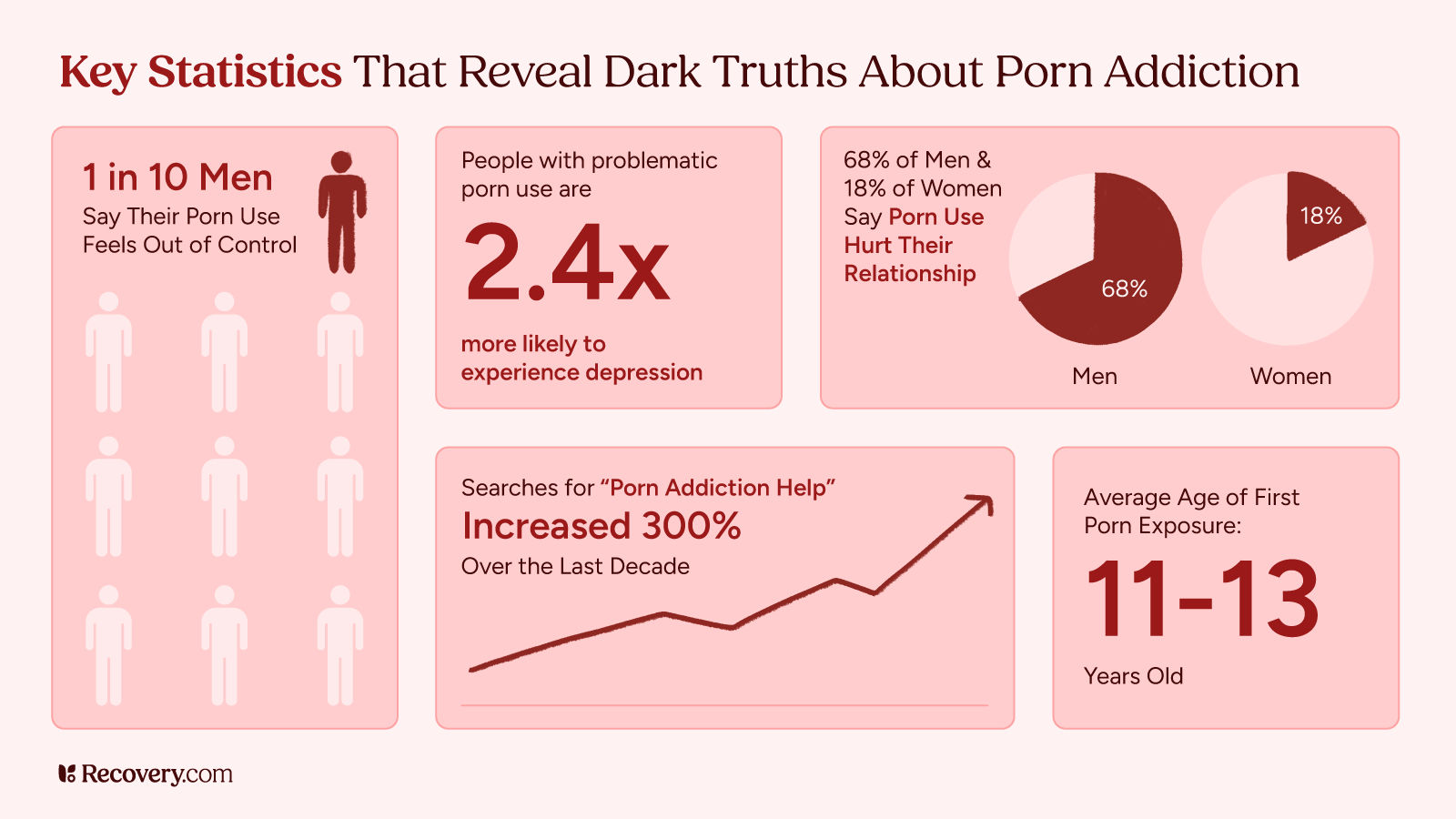
Infographic titled Key Statistics That Reveal Dark Truths About Porn Addiction. Highlights include 1 in 10 men say their porn use feels out of control, problematic porn users are 2.4 times more likely to experience depression, and 68 percent of men and 18 percent of women report porn use hurting their relationships. Other stats show a 300 percent increase in searches for porn addiction help over the past decade, and the average age of first exposure is 11 to 13 years old.

How can I tell if I have a porn addiction?

Like other forms of addiction, porn addiction is primarily marked by a loss of control. Here, an individual’s thoughts, behaviors, and emotions ultimately become consumed by pornography to the point where they begin neglecting other priorities and even people. It often leads to a state of distress whereby even when one wants to take pause and distance themselves, they cannot. Interpersonal relationships, especially romantic or sexual ones, become compromised too, as the obsession with pornography takes priority over real-life interactions and can develop to the point where true physical connection is no longer desirable.

Matt Glowiak, PhD, LCPC, CAADC, ACS, NCC | Hazelden Betty Ford Graduate School

2. You Want More

Pornography consumption can lead to tolerance, similar to substance addiction. Over time, an individual may seek out more explicit or extreme pornographic content to achieve the same level of excitement. This escalation can reinforce dependency and increase the risk of sexual dysfunction.

Social media can also promote unrealistic standards of physical attractiveness and sex, making the lure from these sites to pornographic ones a quick one.

Pornography can create a vicious cycle in the brain, largely due to its impact on dopamine,3 the neurotransmitter responsible for pleasure and motivation.

  • When someone watches porn, their brain releases a surge of dopamine, leading to intense feelings of reward. However, overstimulation can cause the brain to downregulate dopamine receptors4—essentially, reducing their sensitivity to dopamine over time.
  • As a result, the person may start feeling depleted or less satisfied with the same content, leading them to seek out more stimulating material or spend longer periods watching porn to achieve the same high. This is similar to what happens in substance addiction, where repeated exposure leads to tolerance and an increased need for stronger stimuli.5
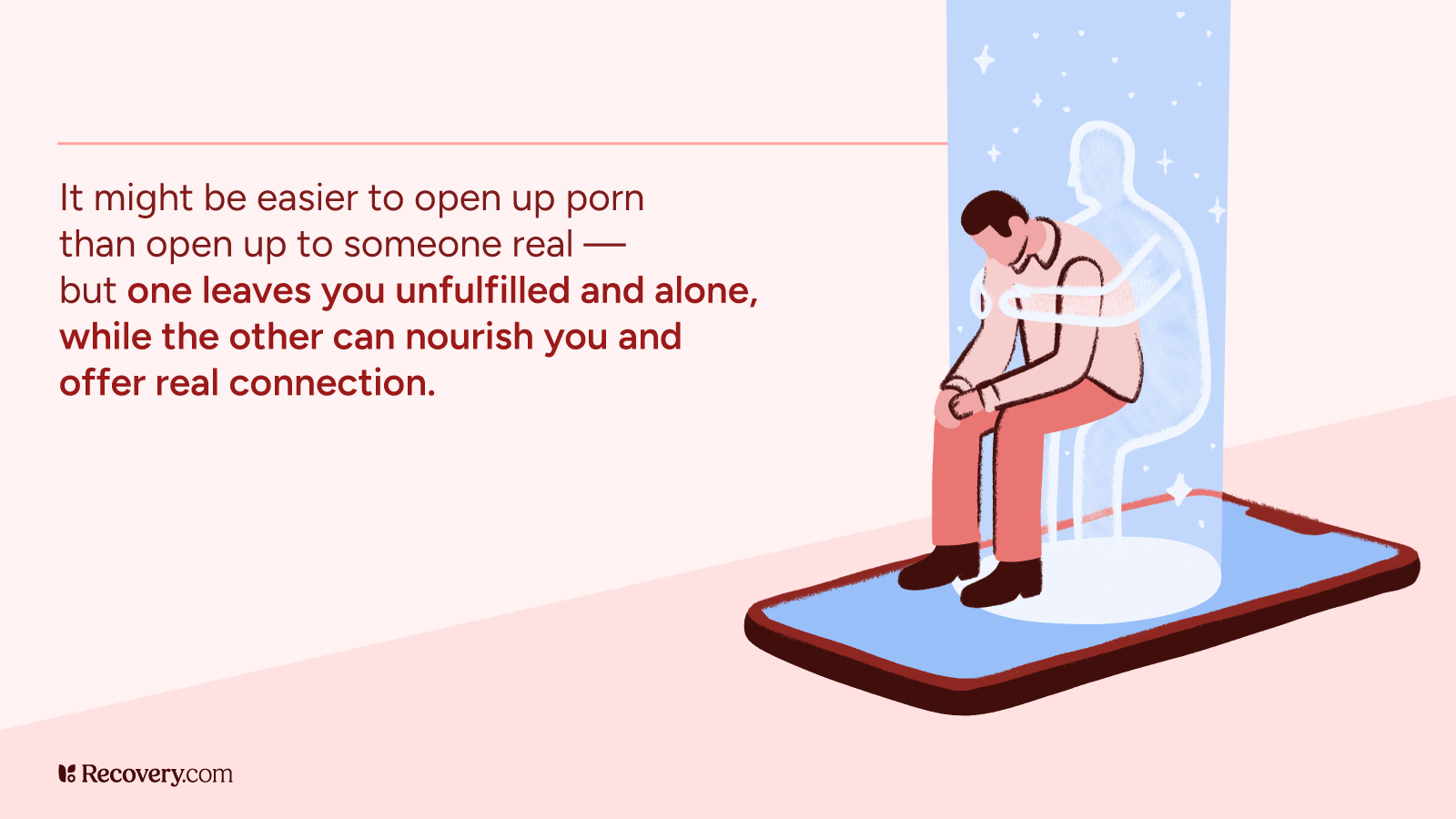
Illustration of a sad man sitting on a smartphone screen, with a glowing silhouette behind him symbolizing emotional connection. Text emphasizes the contrast between porn and real relationships, stating that one leads to loneliness while the other offers true connection.

3. You’ve Lost Time

Pornography use is on the rise due to a number of factors including “accessibility, affordability, and anonymity.”6 Many individuals report losing track of time, which affects productivity, work performance, and personal relationships. Excessive time spent on porn use can lead to neglecting important daily responsibilities.

  • Over time, a pattern of pornography use can make it harder to enjoy everyday pleasures, as the brain becomes wired to seek its dopamine fix through pornography rather than real-life experiences.
  • Some studies suggest that excessive porn use may even contribute to issues like desensitization, difficulty in forming relationships, and sexual dysfunction.
  • In short, by constantly chasing the dopamine high, some people find themselves caught in an escalating loop—needing more extreme content or longer sessions just to feel the same level of excitement, all while their brain becomes less responsive to natural rewards.

4. You’ve Lost Interest in Sex

Frequent viewing of pornographic material can lead to a decline in real-life sexual relationships. Unrealistic expectations created by pornography consumption may result in reduced attraction to a loved one, leading to intimacy issues and relationship problems.

  • The Journal of Sex Research notes that porn websites are more frequently visited7 than any other type of website on the internet and for a longer duration of time.
  • The current market value of the porn industry8 is expected to surpass one billion dollars annually and has experienced a 58% growth in the market since 2018. These are overwhelming statistics that highlight the prevalence and availability of porn that competes with real-life sexual relationships.

5. You’re More Demanding

As porn addiction progresses, individuals may develop unrealistic expectations of sexual activities. They may pressure their partner into engaging in behaviors seen in pornographic content, leading to dissatisfaction and strain in romantic relationships.

  • Porn use becomes a coping mechanism that creates mental health issues and disrupts and replaces natural sexual behavior. While porn addiction is not officially recognized as a diagnosis in the DSM-5 (Diagnostic and Statistical Manual of Mental Disorders, Fifth Edition), it does not mean that it does not significantly impact relationships and cause mental health conditions.
  • While the DSM-5 doesn’t classify it as an addiction, the World Health Organization’s ICD-11 (International Classification of Diseases) does recognize compulsive sexual behavior disorder (CSBD),9 which can include problematic porn use.

So, while there’s still debate over whether “porn addiction” is the right term, research suggests that compulsive porn use can have real effects on mental health and behavior.

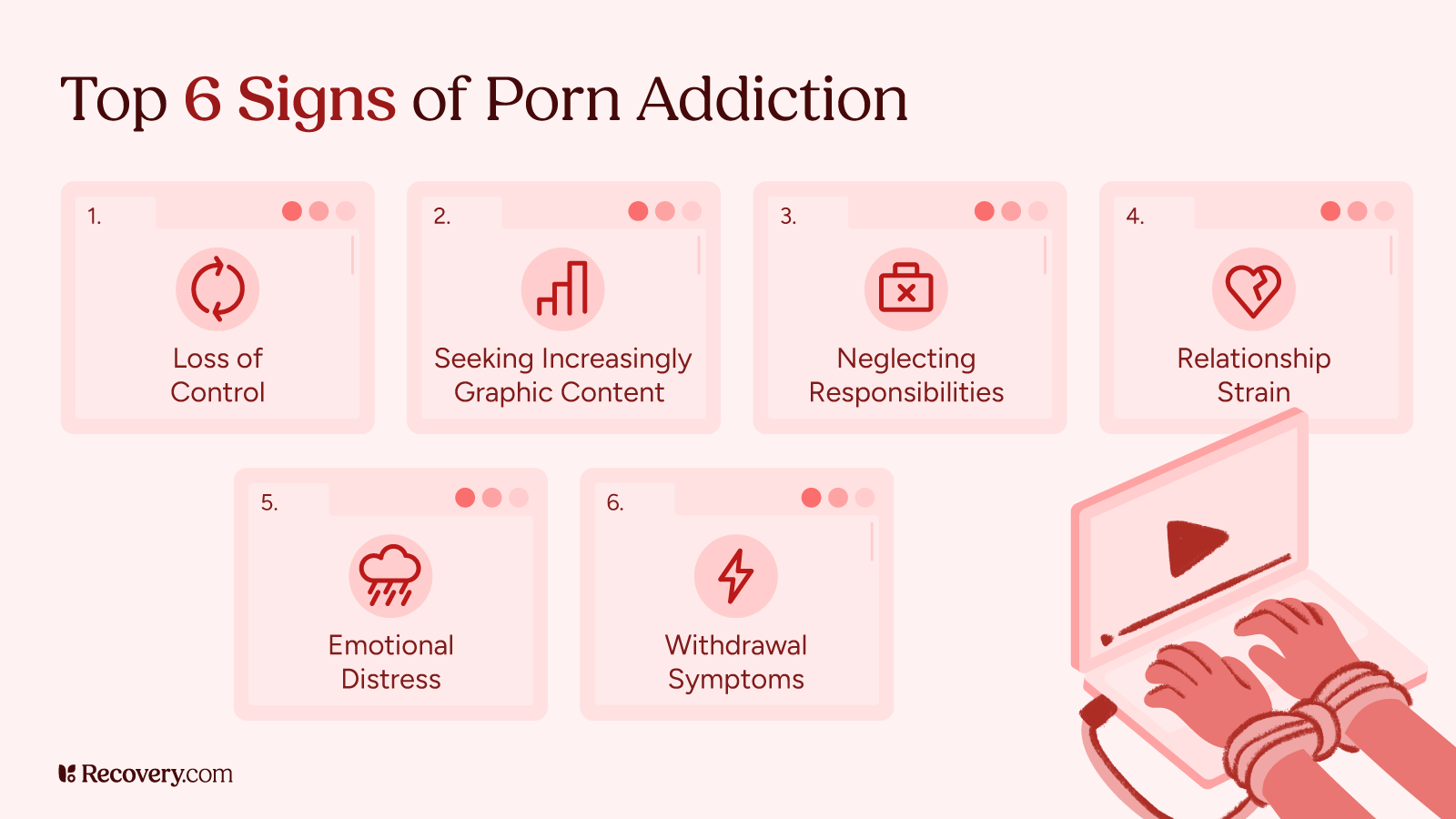
Infographic titled Top 6 Signs of Porn Addiction, listing loss of control, seeking increasingly graphic content, neglecting responsibilities, relationship strain, emotional distress, and withdrawal symptoms. Each sign is shown in a web browser-style box. A graphic on the right shows hands tied to a laptop, symbolizing compulsive use.

What is the difference between sex addiction and pornography addiction?

Sex and porn addiction both involve compulsive sexual behaviors that manifest differently. Sex addiction typically includes a pattern of seeking out sexual experiences (such as multiple partners, risky encounters, or excessive masturbation) despite negative consequences. Porn addiction, which is a subset of sex addiction, is characterized by compulsive pornography use that interferes with relationships, work, or emotional well-being. Both can stem from deeper emotional or psychological struggles, and addressing them often requires exploring underlying issues, developing healthier coping strategies, and developing meaningful connections.

Andrew J. Schreier, ICS, CSAC, LPC, ICGC-II, BACC

6. You’ve Lost Attraction

Another warning sign of porn addiction is a loss of attraction to a romantic partner. The overstimulation of the brain’s reward system due to frequent viewing of pornography7 can alter real-life perceptions of beauty and desirability, affecting the ability to maintain healthy relationships.

  • Sexual health is impacted in a way that influences romantic relationships in real life. Social media can also play a role in disrupting healthy, human relationships. Struggling with porn addiction can also lessen the amount of time spent with partners in romantic relationships.
  • Young adults are also impacted by symptoms of porn addiction like mental health disorders and low self-esteem.

7. You’re Losing Money

Some people who struggle with pornography addiction may spend significant amounts of money on subscriptions, premium content, or even engaging in online sexual activities.

This financial strain can impact daily life, leading to stress and potential conflicts with a family member or loved one. Use of pornography can also have a heavy financial burden, with some sites requiring increasing fees for use.

8. You’re Distracted

In today’s digital age, pornography is more accessible than ever, making it easy to develop compulsive behaviors without realizing the impact on mental health, relationships, self-esteem, and daily life.

While many people consume porn casually, for some, it becomes a habit that feels impossible to break. If you’ve ever found yourself struggling to stop, needing increasingly explicit content, or noticing a decline in real-life intimacy or continual distraction, you’re not alone.

Porn addiction can make it difficult to focus on tasks, leading to decreased productivity and performance at work or school. Individuals may frequently think about viewing porn, leading to an inability to concentrate on important responsibilities.

How can pornography addiction get in the way of my everyday life?

Pornography addiction goes beyond casual viewing—it consumes your time and energy affecting your work, relationships, and mental well-being. The constant need for stimulation rewires your brain creating unrealistic expectations and making real-life intimacy feel unfulfilling. Over time, isolation, secrecy, and shame take over, leading to withdrawal from loved ones and neglect of personal growth. True wellness comes from balance, and breaking free from addiction means reclaiming control over your time, relationships, and sense of self.

Rebecca E. Tenzer MAT, LCSW, CCTP, CGCS, CCATP, CCFP, CIMPH | Astute Counseling & Wellness Services

9. You’re Angry

Feelings of guilt, shame, and frustration can contribute to increased irritability and anger in individuals struggling with pornography addiction. Withdrawal symptoms from excessive porn use may lead to mood swings, emotional instability, and relationship problems.

Research suggests that when people become deeply engrossed in internet pornography, their brains react in a way similar to substance addiction8—certain neural pathways light up, triggering a direct and intense response to the content.

  • Just like in drug addiction, watching porn releases a surge of dopamine, the brain’s pleasure and reward chemical, reinforcing the habit and making it harder to stop.
  • However, over time, dopamine receptors become less responsive, meaning the same content no longer provides the same thrill. This can lead to frustration, irritability, and even anger issues, especially when a person tries to cut back or when real-life experiences don’t match the high of pornography.

Some studies even link compulsive porn use to emotional dysregulation, making individuals more prone to mood swings and impulsivity.

In extreme cases, this cycle of addiction and emotional instability can increase aggression, particularly when someone experiences withdrawal-like symptoms from trying to quit or faces obstacles to accessing porn. This makes it even harder to break free from the cycle, as stress and negative emotions can push them back toward their habitual coping mechanism—watching more porn.

Talking About Porn Addiction

Discussing pornography addiction can be challenging, especially for individuals who experience feelings of guilt or shame. Support groups such as
Sex and Love Addicts Anonymous (S.L.A.A.) can provide a safe space for people to share their struggles and receive guidance from others who have faced similar challenges.

Porn addiction is often linked with other behavioral addictions and substance use disorders, such as alcohol addiction and drug dependency.

Research suggests that behavioral addiction, like pornography addiction, affects the same brain regions10 as substance addiction, reinforcing compulsive behavior.

Seeking Treatment and Recovery

Overcoming pornography addiction requires a combination of self-awareness, support, and professional intervention. Treatment options such as CBT, psychotherapy, and addiction treatment programs can help individuals break free from compulsive pornography use and improve their quality of life.

Recognizing the signs of porn addiction is the first step toward recovery. By seeking help and implementing positive changes, individuals can restore their well-being, maintain healthy relationships, and regain control over their lives.

Porn addiction can feel isolating, but recovery is possible with the right support and strategies. Recognizing the signs of problematic use is the first step toward making meaningful changes. Help and treatment are available.

Overcoming compulsive pornography use isn’t just about quitting—it’s about regaining control, rebuilding healthy relationships, and improving overall well-being.

If you or someone you know is struggling, seeking help is a courageous step toward a healthier and more fulfilling life. Explore porn addiction rehabs now and speak to an admissions specialist today.


FAQs

Q: What is porn addiction?

A: Pornography addiction, also known as problematic pornography use (PPU), is characterized by an individual’s inability to control their consumption of pornographic material, leading to significant distress or impairment in personal, social, or occupational areas of life. This compulsive behavior persists despite negative consequences.

Q: What are 5 warning signs of addiction?

A: Identifying addiction involves recognizing certain behavioral patterns. Five warning signs include:

  1. Preoccupation: Constantly thinking about engaging in the addictive behavior.
  2. Loss of Control: Unsuccessful attempts to reduce or stop the behavior.
  3. Tolerance: Needing increasing amounts of the behavior to achieve the desired effect.
  4. Withdrawal: Experiencing negative emotions or physical symptoms when unable to engage in the behavior.
  5. Neglecting Responsibilities: Prioritizing the behavior over important personal or professional obligations.

Q: What does porn addiction do to your brain?

A: Chronic consumption of pornography can lead to neurobiological changes similar to those observed in substance addictions. These changes may include altered brain structure and function, affecting areas related to reward, motivation, and decision-making. Such alterations can reinforce compulsive viewing behaviors and diminish sensitivity to natural rewards.

Q: How to treat pornography addiction?

A: Effective treatment approaches for pornography addiction often involve:

  • Psychotherapy: Cognitive Behavioral Therapy (CBT) has been shown to reduce the severity of PPU and associated symptoms like anxiety and depression.
  • Support Groups: Participating in peer support groups provides community support and shared coping strategies.
  • Medication: In some cases, pharmacotherapy may be considered as part of a comprehensive treatment plan.

A combination of these approaches is often recommended for optimal outcomes.

Q: What causes problematic pornography use?

A: The development of problematic pornography use can be influenced by various factors, including:

  • Psychological Factors: Stress, anxiety, and depression are strongly related to increased pornography consumption.
  • Behavioral Factors: Habitual use as a coping mechanism for negative emotions or boredom.
  • Social Factors: Exposure to environments where pornography use is normalized or encouraged.

Understanding these underlying causes is crucial for effective intervention and treatment.

Q: What is the difference between sex addiction and pornography addiction?

A: While both involve compulsive sexual behaviors, they differ in focus:

  • Sex Addiction: Encompasses a broad range of compulsive sexual activities, including promiscuity, excessive masturbation, and risky sexual behaviors.
  • Pornography Addiction: Specifically relates to the compulsive consumption of pornographic material, often leading to isolation and neglect of real-life relationships.

Both conditions can co-occur and may require similar therapeutic approaches.

Q: How can pornography addiction affect your mental health?

A: Problematic pornography use is associated with various mental health challenges, including:

  • Increased Anxiety and Depression: Excessive use can exacerbate feelings of anxiety and depression.
  • Cognitive Distortions: Developing unrealistic expectations about sex and relationships.
  • Emotional Distress: Feelings of guilt, shame, or hopelessness related to one’s behavior.

Addressing these mental health issues is a critical component of comprehensive treatment.

Q: How can I tell if I have a pornography addiction?

A: Self-assessment questions to consider:

  • Frequency: Do you spend a significant portion of your time engaging with pornography?
  • Control: Have you tried to cut back without success?